 how-to
What Are Seller Closing Costs for FSBO Sellers?
Last Updated: November 3, 2026
Quick Summary
Seller closing costs are the fees a home seller pays to legally transfer a property and settle the transaction, taken out of the sale price at settlement. When you sell for sale by owner, no listing agent splits the bill, so you cover the seller side yourself. The fees you owe are often smaller than sellers fear and more negotiable than they expect.
- The seller's side of a settlement statement is a stack of separate charges you can question individually.
- Transfer taxes, recording fees, and mortgage payoff amounts are set by statute or your lender and are not negotiable.
- Closing agent fees, title services, and repair credits can all be discussed and negotiated.
- A seller closing costs calculator estimates net proceeds by subtracting costs, mortgage payoff, and concessions from the sale price.
- Under TILA-RESPA rules, a seller generally receives the closing disclosure at least three business days before consummation.
Table of Contents
- What Seller Closing Costs Actually Cover in a FSBO Sale
- How Much Are Closing Costs for a Seller Without an Agent?
- Which Fees Are Negotiable, Customary, or Legally Required
- Using a Seller Closing Costs Calculator to Estimate Your Net
- Build Your Own FSBO Closing Costs Template
- FSBO Closing Cost Examples: What Sellers Really Pay
- Reviewing Your Settlement Statement Before You Sign
- Get a Local Cost Review Before You List
- Frequently Asked Questions
What Seller Closing Costs Actually Cover in a FSBO Sale
Seller closing costs are the fees a home seller pays to legally transfer a property and settle the transaction, taken out of the sale price at settlement.
The seller's side of a settlement statement is not one big lump. It is a stack of separate charges, and you can question each one.
What typically lands on the seller's side:
- Owner's title insurance policy and the title search behind it
- Escrow or closing agent fees, sometimes split with the buyer
- Transfer taxes and any recording charges your area requires
- Prorated property taxes for the days you owned the home that year
- Mortgage payoff and lien releases on your existing loan
- Your share of buyer concessions, if you agreed to any
The exact mix depends on local custom. Two counties can treat the same fee very differently, so a generic checklist only gets you partway.
How Much Are Closing Costs for a Seller Without an Agent?
Most sellers pay a percentage of the sale price in closing costs, and FSBO sellers pay a similar share on the seller side. The big difference is what you skip: no listing commission comes off the top. Your total still varies by state, county, and contract.
Budget for these costs and adjust once you have real quotes. Learn how to calculate closing costs in East Valley with a line-by-line breakdown of buyer and seller fees. Get local figures rather than locking in a number from a blog post.
Typical FSBO Cost Ranges by Category
| Cost Category | Who Usually Pays | Negotiable? | What Drives the Amount |
|---|---|---|---|
| Owner's title insurance | Seller, by local custom | Often | Sale price, insurer, region |
| Title search and title work | Seller | Sometimes | Property type, lien history |
| Escrow / closing agent fee | Split or seller | Often | Company, complexity |
| Transfer taxes | Seller or buyer by state law | No, if statutory | Sale price, state rules |
| Recording fees | Buyer or seller by custom | Rarely | Number of documents |
| Property tax prorations | Seller, prorated | No | Closing date, tax rate |
| Mortgage payoff, lien releases | Seller | No | Loan balance, lender fees |
Read that table as a starting point, not a verdict. Your contract and your county decide the final split.
Which Fees Are Negotiable, Customary, or Legally Required
Sort every charge into one of three buckets and the whole process gets simpler.
Legally required. Transfer taxes, recording fees, and mortgage payoff amounts are set by statute or by your lender. You cannot talk your way out of them. Check the Arizona Department of Revenue transfer tax guidance and your county recorder for the rules that apply to your sale.
Customary. Title insurance and escrow fees usually follow local habit. In many areas the seller pays for the owner's policy. That is tradition, not law, and tradition bends in negotiation.
Negotiable. Here is where FSBO sellers leave money on the table. If a buyer asks you to cover part of their costs, that is a seller concession, and it is a choice, not an obligation. How to ask for seller concessions on closing costs covers examples, negotiation tips, and what's reasonable to request.
Using a Seller Closing Costs Calculator to Estimate Your Net
A seller closing costs calculator estimates your net proceeds by subtracting your closing costs, mortgage payoff, and any concessions from the sale price.
The math is simple:
Net proceeds = Sale price − Mortgage payoff − Seller closing costs − Concessions − Prorated taxes owed
Run it before you list, not after. A calculator shows you the sale price you actually need to walk away with the cash you want. That changes how you price.
Most online calculators use state averages. The Consumer Financial Protection Bureau's closing cost guide explains which charges belong on a settlement statement, so you know what to plug in.
Build Your Own FSBO Closing Costs Template
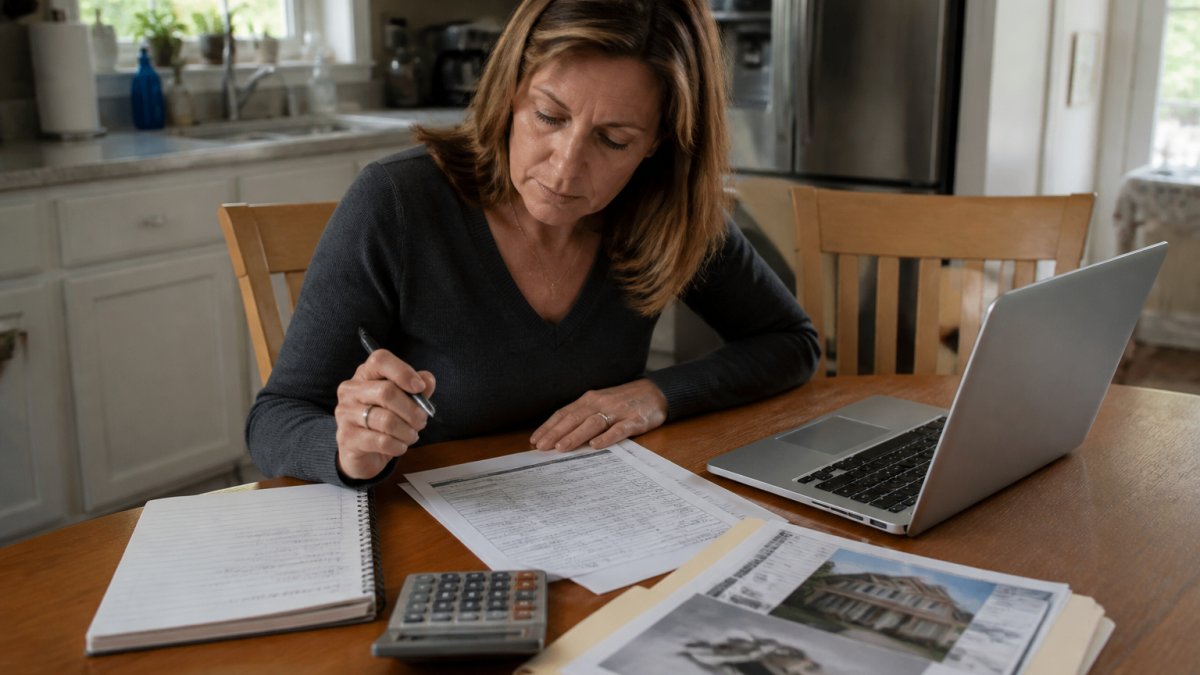
An FSBO closing costs template is a one-page worksheet listing every fee you expect to pay, with columns for the estimate, the actual quote, and who pays.
Line Items to Include in Your Worksheet
- Title search and title insurance premium
- Escrow or closing agent fee, your share
- Transfer tax, if your state charges one
- Recording fees for the deed and releases
- Property tax proration to the closing date
- Mortgage payoff quote and any payoff fees
- HOA transfer or document fees, if applicable
- Attorney fees, where required
- Buyer concessions you agreed to
- Courier, wire, and notary charges
Get two or three quotes for title and escrow work. The spread between companies is real, and you are allowed to shop.
FSBO Closing Cost Examples: What Sellers Really Pay
FSBO seller side, itemized:
- Owner's title insurance policy: roughly 0.5%-0.75% of sale price in many markets, so about $2,000-$3,000 here
- Title search and title work: a few hundred dollars, often bundled with the policy
- Escrow or closing agent fee, seller share: commonly $500-$1,500, sometimes split 50/50 with the buyer
- Transfer tax: state-specific; where it applies, often 0.1%-1% of price, so $400-$4,000 on this sale
- Recording fees: typically under $200 for the deed and releases
- Property tax proration: depends on the tax year and closing date; if the seller occupied the home for six months of a $6,000 annual bill, the credit to the buyer is about $3,000
- Mortgage payoff and lien releases: the $240,000 balance plus any lender payoff or wire fees, usually under $100
- HOA transfer or document fees, if applicable: often $200-$500
- Buyer concessions, if negotiated: whatever you agreed to in writing
Add those up and a typical FSBO seller in this example nets somewhere in the low-to-mid $140,000s before any buyer-agent compensation, depending on the transfer tax and title premium in their county.
Agent-assisted comparison, same sale. A listing commission is negotiable, but a common pattern is 5%-6% of the sale price split between the listing and buyer sides, which on $400,000 is $20,000-$24,000.
The variable most FSBO guides skip: buyer-agent compensation. A buyer with an agent may ask the seller to cover that agent's fee as a concession.
What the comparison actually tells you. FSBO usually nets more when the seller prices well, negotiates repairs firmly, and keeps buyer concessions modest. If you are weighing the no-agent route, our walkthrough on selling an inherited home without a realtor covers the paperwork and cost realities step by step.
Reviewing Your Settlement Statement Before You Sign
Your settlement statement, often called a closing disclosure, lists every charge and credit in the deal.
Read it in this order.
- Parties and property. Confirm your name, the buyer's name, and the property address match the contract exactly. A misspelled name or wrong parcel number can delay recording.
- Sale price and credits. The contract price should match to the dollar. Any seller credit or concession should appear as a debit to you and a credit to the buyer, matching what you agreed to in writing.
- Loan payoff. Compare the payoff figure to the lender's written payoff quote, which is usually good for a set number of days. If the closing date slipped past that window, request an updated quote; a stale one can leave a small balance that follows you after closing.
- Prorations. Property taxes, HOA dues, and any rents are prorated to the closing date. Check the math against the tax bill and the closing date. If taxes are paid in arrears in your county, you will typically owe the buyer a credit for the days you owned the home.
- Fee lines. Every title, escrow, recording, transfer-tax, and courier charge should match a quote you received. A fee that appears for the first time on the closing disclosure is worth one phone call before you sign.
- Payoff of liens and releases. If a contractor lien, judgment, or HOA lien is being paid at closing, confirm the amount and that a release will be recorded.
How the money actually moves. Most seller costs are deducted from proceeds rather than paid out of pocket.
What to bring to the review. Your purchase contract and any amendments, the lender's payoff quote, the title company's quote, your tax bill, your HOA statement, and a copy of any concession agreement.
The CFPB's guide to reviewing closing forms walks through what each section of the closing disclosure means, and your settlement agent should be willing to walk you through any line you do not recognize before you sign.
Get a Local Cost Review Before You List
Local custom decides most of your closing costs, and local custom is not in any national guide. Before you list, get a local cost review so you know what you will pay and what you can push back on. FSBO legal risks and how to avoid them covers the pitfalls to guard against before you list.
Selling on your own is doable. Selling on your own without knowing your costs is how sellers get surprised at the table. Get the numbers first, then list with confidence.
Frequently Asked Questions
How much are closing costs on a FSBO sale?
Seller closing costs on a FSBO sale depend on your state, county and local customs, so get local quotes before you list. The biggest swing factors are transfer taxes, title insurance, and any seller concessions you agree to. Because you skip the listing agent commission, your total cost is usually lower than an agent-assisted sale, but you still pay title, escrow, recording, and prorated property taxes.
What does $5,000 in seller concessions mean for my net proceeds?
Seller concessions are credits you agree to give the buyer at closing, often toward their loan costs. A $5,000 concession reduces your net proceeds by $5,000, paid out of your side of the settlement statement. It does not change the sale price on paper, but it does lower what you walk away with. Before agreeing, check how the credit is structured with your closing agent and confirm your lender and buyer's lender allow it.
Can a FSBO seller negotiate closing costs with the buyer?
Yes. In a FSBO sale, nearly every fee is open to discussion except legally required charges like transfer taxes and recording fees. You can ask the buyer to cover title insurance, escrow fees, or a survey, and you can push back on requests for concessions. Put every agreement in the purchase contract so the closing agent applies it correctly. Get competing quotes for title and escrow services, since those fees vary between providers.
How do I calculate seller closing costs for a FSBO home sale?
Start with the sale price, then subtract each line item: mortgage payoff, title insurance, escrow or closing-agent fees, transfer taxes, recording fees, prorated property taxes, and any concessions. A seller closing costs calculator or a simple FSBO closing costs template handles the math. Ask your title company for a fee estimate before you list so your numbers reflect local rates, not national averages. Review the final settlement statement against your estimate before signing.
The smartest move is knowing your net before you sign anything. Bernie Krause helps East Valley sellers price, negotiate, and review settlement statements so nothing on the closing table catches them off guard. We bring local market knowledge, hands-on negotiation, and a steady hand through the paperwork, whether you sell with an agent or list on your own. Get started with Bernie Krause and list with a clear picture of what you will actually walk away with.