 how-to
How to Prepare for Closing Costs in Chandler
Last Updated: November 5, 2026
Quick Summary
To prepare for closing costs Chandler buyers should save toward their actual cash-to-close figure, not a round number, using a Loan Estimate and itemized worksheet. Build a dedicated savings account, collect quotes early, and review your Closing Disclosure at least three business days before closing.
- A common rule of thumb for closing costs is roughly 2% to 5% of the purchase price.
- Ask your lender for a Loan Estimate so you have a real closing-cost figure to save toward.
- Automate monthly deposits equal to your remaining cash-to-close target divided by months remaining.
- Compare Loan Estimates from at least two lenders and ask about lender credits.
- Review your Closing Disclosure line by line at least three business days before closing.
Table of Contents
- What Is Included in Buyer Closing Costs
- Typical Closing Costs for Buyers in Arizona
- How to Save for Closing Costs
- Closing Disclosure Checklist: What to Verify Before You Sign
- How to Compare Loan Estimates and Spot Negotiable Fees
- Cash-to-Close Examples with Credits and Deposits
- What to Do When the Closing Disclosure Differs from the Estimate
- Next Step: Build Your Chandler Closing-Cost Plan with Bernie Krause
- Frequently Asked Questions
What Is Included in Buyer Closing Costs
Closing costs are the fees and charges a buyer pays to finalize a home purchase, separate from the down payment and the purchase price itself. This guide breaks down closing costs Chandler buyers face so you can budget with confidence before you make an offer.
Most buyers see two buckets of fees on their paperwork. Knowing which is which helps you spot what's negotiable.
- Lender fees: what the mortgage company charges to make the loan
- Third-party fees: what outside providers charge for services like appraisal and title work
Lender Fees and Loan Origination Charges
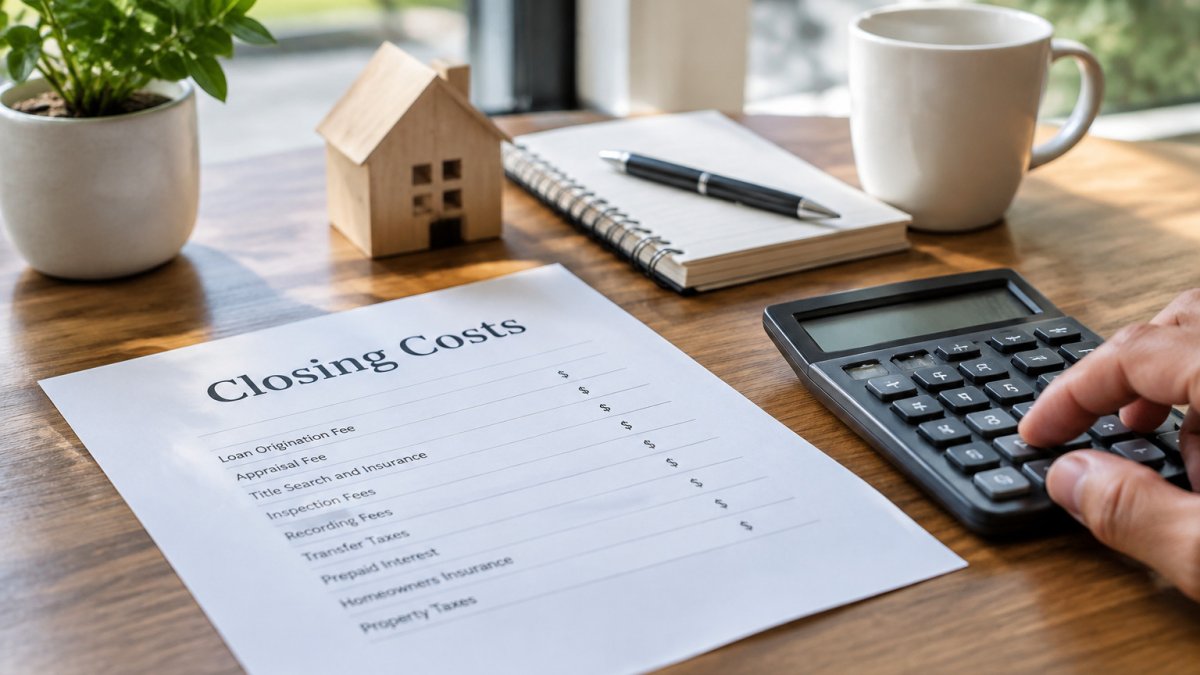
The loan origination fee is what the lender charges to process and underwrite your mortgage. It's often quoted as a percentage of the loan amount, but flat fees exist too. Ask for it in writing early.
Other lender charges may include application fees, underwriting fees, and rate-lock fees. These live on your Loan Estimate, which we cover below.
Third-Party Fees: Appraisal, Inspection, and Title
These costs go to providers who protect you and the lender:
- Appraisal fee: an independent value check on the home
- Home inspection: a full condition review, usually optional but smart
- Title search and title insurance: confirms clean ownership and protects against claims
- Escrow and recording fees: cover the settlement and the public deed filing
For a line-by-line walkthrough of how these add up on a real purchase, see our guide on what closing costs include for a Gilbert home purchase.
Typical Closing Costs for Buyers in Arizona
A common rule of thumb for closing costs is roughly 2% to 5% of the purchase price, though the actual number depends on your loan type, your lender, and what you negotiate (Determine your down payment). Ask your lender for a Loan Estimate to see figures specific to your loan.
That range is wide for a reason. Two buyers on the same street can pay very different amounts.
A Chandler-Specific Itemized Cost Worksheet
Use this worksheet to build your own estimate. Plug in real quotes as you get them.
| Cost Item | Who Charges It | How to Estimate |
|---|---|---|
| Loan origination fee | Lender | Ask for a flat quote or percentage |
| Appraisal | Appraisal company | Fixed fee, confirm with lender |
| Home inspection | Inspector | Per-square-foot or flat quote |
| Title search and insurance | Title company | Ask for a quote on your address |
| Escrow/settlement fee | Escrow officer | Flat fee, varies by company |
| Recording fees | County | Small fixed amount |
| Prepaid taxes | County | Based on tax prorations |
| Homeowners insurance | Insurer | Annual premium, paid upfront |
Watch out: skipping the title quote until the last week is how buyers get surprised. Get it early.
Our guide on how to calculate your cash to close walks through each line with an Arizona calculator.
How to Save for Closing Costs
Start with your target number from the worksheet, then work backward. The mistake most buyers make is saving toward a round number like "$10,000" instead of toward their actual cash-to-close figure, which includes closing costs, the down payment, prepaid items, and minus any credits or deposits already in escrow.
Here is the math most guides skip. Suppose you are buying a $400,000 home with a 10% down payment ($40,000) and estimated closing costs of 3% ($12,000). Your gross cash to close is about $52,000. If you have already deposited $5,000 in earnest money and negotiated a $4,000 seller concession toward closing costs, your remaining cash due at closing drops to roughly $43,000. That is the number to save toward, not the $52,000 headline figure.
Set a separate savings account and automate a transfer on payday. Treat it like a bill, not a leftover. A common pattern among first-time buyers is to divide the remaining cash-to-close target by the number of months until closing and automate that amount monthly, then top up with any windfalls (tax refunds, bonuses, gift funds).

Month-by-Month Savings Plan and Cash-to-Close Checklist
A practical timeline looks like this:
- Months 6-5 out: Get pre-approved and set your target price range. Ask your lender for a Loan Estimate so you have a real closing-cost figure to save toward, not a guess.
- Months 5-4 out: Build your itemized worksheet (below) and collect quotes for inspection, title, and homeowners insurance. Update your savings target with real numbers.
- Months 4-3 out: Open a dedicated savings account and automate monthly deposits equal to your remaining cash-to-close target divided by months remaining. Keep gift funds documented, lenders require a paper trail.
- Months 3-2 out: Compare Loan Estimates from at least two lenders. Ask each about lender credits and whether any fees can be reduced. Update your target if the numbers move.
- Months 2-1 out: Confirm earnest money timing and amount with your agent and escrow officer. Confirm how seller concessions will be applied on the Closing Disclosure.
- Final month: Review your Closing Disclosure line by line at least three business days before closing. Verify the cash-to-close figure matches your savings plus any wired funds.
Checklist before you sign:
- Savings account funded to your cash-to-close target (closing costs + down payment − credits − earnest money)
- Earnest money deposit confirmed with escrow and receipt saved
- Lender credits and seller concessions documented in writing
- Homeowners insurance quoted and bound, with the first-year premium accounted for
- Cashier's check or wire instructions verified by phone with the escrow officer (never trust wire instructions sent by email alone)
- Gift funds documented with a gift letter if applicable
Watch out: wiring money is the single highest-risk step in the final week. Confirm wire instructions by phone using a number you looked up independently, not one provided in an email.
Ask about down payment assistance. Our overview of first-time home buyer programs in the East Valley covers eligibility and how to apply.
Closing Disclosure Checklist: What to Verify Before You Sign
The Closing Disclosure is the final statement of your loan terms and costs, and it is provided before closing. Compare it against your Loan Estimate. They should match.
Verify these before you sign:
- Loan amount, interest rate, and monthly payment
- Origination charges and any changed fees
- Cash to close total
- Seller concessions and lender credits applied correctly
- Names on the deed and title
If something looks off, ask your lender and escrow officer in writing. You have time to fix errors before the closing date.
To see where this step lands in the full process, read our Arizona home buying timeline.
How to Compare Loan Estimates and Spot Negotiable Fees
A Loan Estimate is a standard three-page form that shows your projected rate, payment, and closing costs. Lenders provide it shortly after you apply. Put two or three side by side and the differences jump out.
Focus on these lines:
- Origination charges: often negotiable, especially if you shop
- Discount points: optional, they lower your rate for an upfront cost
- Lender credits: money toward closing costs in exchange for a higher rate
- Third-party services: some you can shop for yourself
The Consumer Financial Protection Bureau's Loan Estimate guide explains each page so you know what you're comparing. A common mistake is comparing only the rate. The fees tell the real story.
Cash-to-Close Examples with Credits and Deposits
Cash to close is the total you bring to settlement: closing costs plus down payment, minus credits and deposits already paid. Two buyers with the same price can bring very different checks.
Example one: a buyer puts down 10%, pays standard closing costs, and receives a seller concession toward fees. The concession lowers the check at closing.
Example two: a buyer puts down 5%, gets a lender credit in exchange for a slightly higher rate, and has earnest money already sitting in escrow. That deposit counts toward the total.
Earnest money isn't extra money. It's part of your cash to close, just paid earlier. Keep the receipt.
If you want to lower your number, learn how to ask for seller concessions on closing costs with real negotiation examples.
What to Do When the Closing Disclosure Differs from the Estimate
Sometimes the final numbers don't match the estimate. Don't panic, and don't sign until you understand why.
Start by identifying which fees changed. Some increases are permitted under federal tolerance rules, while others are not, so ask your lender to explain each change.
Then do this:
- Ask your lender for a written explanation of each change
- Ask whether the change is permitted under the applicable rules
- Request a corrected Closing Disclosure if needed
- Delay signing if the error isn't resolved
The CFPB's closing disclosure explainer details which fees can change and by how much. Knowing the rules puts you in a stronger position.
Next Step: Build Your Chandler Closing-Cost Plan with Bernie Krause
Getting your cash to close right takes planning, and the earlier you start, the less stressful the final week becomes. At Bernie Krause, we help East Valley buyers navigate the home buying process with expert guidance and support.
Bernie Krause provides expert guidance and support throughout the entire home buying process.
Get started with Bernie Krause to talk through your Chandler home purchase.
Frequently Asked Questions
What are the typical closing costs for buyers in Arizona?
Buyers in Arizona usually pay between 2% and 5% of the purchase price in closing costs. The total depends on lender fees, title insurance, appraisal, inspection, prepaid taxes, and homeowners insurance. Ask your lender for a Loan Estimate within three business days of applying so you can see the itemized numbers for your specific loan.
How much are closing costs for a $400,000 house?
Closing costs vary by loan type, lender, and negotiated terms, so a Loan Estimate is the best way to see your exact figures. Your Loan Estimate will show the exact figures, including lender fees, title insurance, appraisal, and prepaid expenses.
When should I start saving for closing costs?
Start as soon as you begin house hunting, ideally three to six months before you plan to make an offer. A month-by-month savings plan helps you build the cash reserve without last-minute stress. Set a target based on 2% to 5% of your expected purchase price, automate transfers to a dedicated savings account, and revisit the number once you have a Loan Estimate in hand.
Can a seller pay some of the buyer's closing costs?
Yes. Seller concessions are negotiable and can cover a portion of your closing costs, often through a credit at settlement. Your purchase contract should state the requested amount and any lender limits. Combine seller concessions with lender credits and your earnest money deposit to lower the cash you bring to closing. Review the Closing Disclosure carefully to confirm every credit is applied correctly.