 listicle
What Upgrades Increase Home Value in Gilbert 2026
Table of Contents
- Why 2026 Is a Critical Year for Gilbert Home Upgrades
- 1. Steel Entry Door Replacement: The $2,435 Upgrade That Recoups the Most
- 2. Manufactured Stone Veneer: A $11,702 Exterior Bet on Curb Appeal
- 3. Flooring Replacement: The Interior Upgrade Worth $11,731
- 4. Energy-Efficient Window Upgrades: Cutting Utility Costs While Boosting Value
- 5. Minor Kitchen and Bathroom Refreshes: High ROI Without the Gut Renovation
- 6. Professional Interior Painting: The Low-Cost, High-Impact Move
- 7. Fiber-Cement Siding Replacement: Long-Term Durability for Desert Homes
- The One Upgrade Most Sellers Skip
- Frequently Asked Questions
Last Updated: September 13, 2026
Why 2026 Is a Critical Year for Gilbert Home Upgrades
Timing matters more than most sellers realize. This guide from Bernie Krause covers what upgrades increase home value in Gilbert 2026, and the answer starts with one uncomfortable fact: the East Valley market has shifted. Housing supply has loosened compared to the frenzy of recent years, and buyers now negotiate instead of bidding blind. That changes the math on renovations.
When inventory was tight, almost any improvement sold a home. Today, buyers compare properties line by line, and they notice deferred maintenance. A home with aging windows or worn carpet sits on the market while a refreshed neighbor goes under contract in days.
The upgrades below earn their keep because they target what local buyers actually pay for: curb appeal, energy efficiency, and move-in readiness. Here is the throughline for this entire list. In Gilbert, value comes from reducing a buyer's future costs, not from chasing design trends.
1. Steel Entry Door Replacement: The $2,435 Upgrade That Recoups the Most
A steel entry door replacement is the single highest-return exterior project for most sellers, recovering a large share of its cost at resale according to Zillow's best home improvements analysis. The $2,435 investment buys durability against desert heat, better sealing than aging wood, and an immediate first impression.
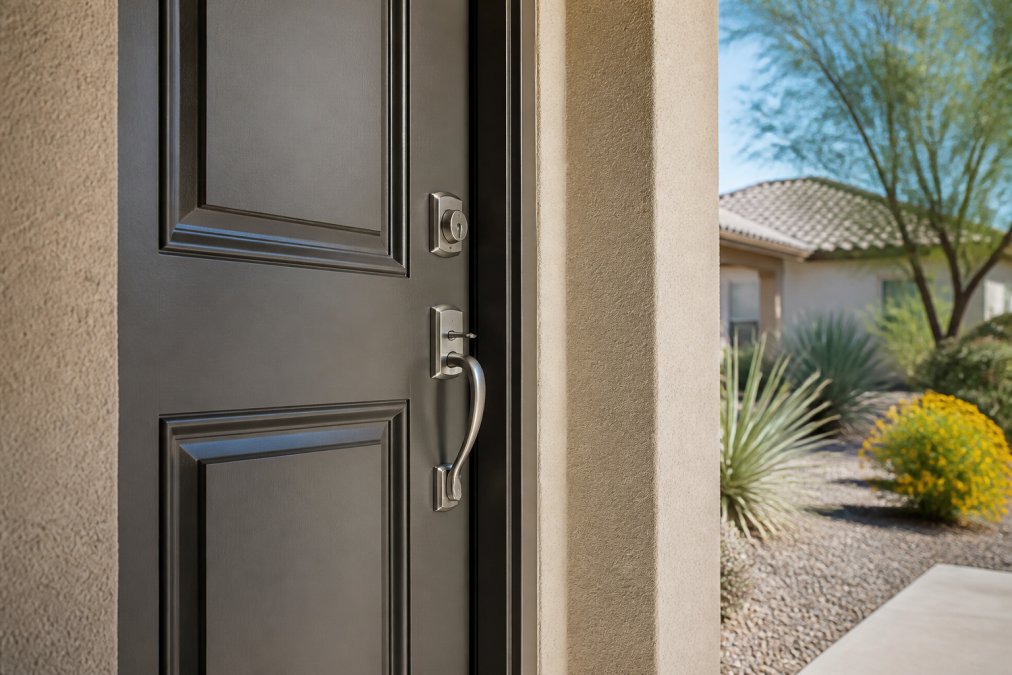
What most guides miss is the sealing detail. In Gilbert, a door that warps in summer heat leaks cooled air all season. Buyers touring in July feel that instantly.
Pros: Consistently strong cost recoupment, immediate aesthetic lift, better security. Cons: Professional installation is non-negotiable for proper sealing.
2. Manufactured Stone Veneer: A $11,702 Exterior Bet on Curb Appeal
Manufactured stone veneer is a decorative exterior upgrade that adds texture and a premium look to entryways and pillars. At roughly $11,702, it is a bigger bet, and it pays off specifically for homes that blend into a sea of standard stucco.
The material resists heat and sun damage, needs less upkeep than natural stone, and photographs beautifully for listing images. That last point matters more than sellers expect. Most buyers form an opinion from the first photo before they ever schedule a showing.
Pros: Strong visual differentiation, low maintenance, boosts perceived value. Cons: Higher upfront cost than paint or trim work.
3. Flooring Replacement: The Interior Upgrade Worth $11,731
Flooring replacement is the interior project with the clearest value story, adding an average of $11,731 according to HomeLight's research on value-boosting upgrades. Dated carpet or damaged tile signals neglect to buyers, and that signal spreads to how they judge the rest of the home.
High-traffic areas matter most: entryways, hallways, kitchens, and living rooms. You do not need to redo every square foot. Replacing the worst sections and deep-cleaning the rest often achieves most of the effect.
Pros: Broad buyer appeal, strong survey-backed ROI, modernizes the whole interior. Cons: Installation disrupts daily living for several days.
4. Energy-Efficient Window Upgrades: Cutting Utility Costs While Boosting Value
Energy-efficient window upgrades recover roughly 50% to 70% of their cost at resale, based on Opendoor's guide to improvements that increase home value. That national range understates the case here, because cooling loads dominate the local utility bill and window performance is one of the few upgrades that lowers a buyer's monthly costs from day one.
What actually drives the savings is the glass spec, not the frame color. Look for three numbers on the NFRC label:
- U-factor, how fast heat moves through the assembly. Lower is better. In this climate, target 0.30 or below.
- Solar Heat Gain Coefficient (SHGC), how much solar radiation passes through. For west- and south-facing glass, aim for 0.25 or lower.
- Visible Transmittance (VT), how much daylight comes through. Higher VT keeps rooms bright while SHGC stays low.
A dual-pane unit with a low-E coating and argon fill hits all three. Single-pane aluminum-frame windows, common in homes built before the mid-1990s, do not, and they radiate afternoon heat straight into the living room.
Replacement windows also cut outside noise, reduce dust infiltration during monsoon season, and eliminate the condensation and seal failures that show up in inspection reports. For desert homes with single-pane glass, this is one of the few upgrades that lowers a buyer's monthly costs from day one.
Pros: Recoups a majority of cost, lowers utility bills, improves comfort and quiet. Cons: Whole-home replacement is a significant upfront investment, and lead times on custom sizes can run several weeks.
5. Minor Kitchen and Bathroom Refreshes: High ROI Without the Gut Renovation
Minor kitchen and bathroom refreshes deliver high ROI without a gut renovation, and they remain the best ways to prepare a home for sale on a controlled budget. Cabinet hardware, updated lighting, a modern faucet, fresh caulking, and new vanity mirrors change how buyers read a room.
A full kitchen remodel rarely returns its cost. Targeted updates do. The goal is to remove the small signals of age that make buyers start subtracting from your asking price.
| Room | Typical Updates | Why It Works |
|---|---|---|
| Kitchen | Hardware, lighting, faucet | Modernizes without layout changes |
| Bathroom | Vanity, mirrors, caulking | Signals good maintenance |
| Both | Fresh paint, deep clean | Removes signs of wear |
Pros: Strong ROI versus major remodels, minimal disruption, fast turnaround. Cons: Does not fix structural or layout problems.
6. Professional Interior Painting: The Low-Cost, High-Impact Move
Professional interior painting is one of the highest-ROI projects a seller can complete, and it costs a fraction of a remodel. Neutral paint palettes broaden buyer appeal by letting people imagine their own furniture in the space.
Color choice is where this goes wrong. Bold accent walls that felt personal to you read as work to a buyer. Stick to warm whites, soft greys, and greige tones that brighten rooms and make them appear larger.
Pros: Quick turnaround, low cost, universally appealing when done in neutrals. Cons: Poor color selection can hurt more than help.
7. Fiber-Cement Siding Replacement: Long-Term Durability for Desert Homes
Fiber-cement siding replacement is a long-term durability play, and it is the upgrade most local guides skip because it is not glamorous. That is exactly why it deserves a section here. In a market where buyers now negotiate line by line, a home with cracked stucco, sun-bleached wood trim, or failing hardboard siding gets priced down before the inspection even happens.
Fiber-cement is a composite of Portland cement, sand, and cellulose fiber. It does not rot, it does not feed termites, and it holds paint far longer than wood under intense UV exposure. That last point is the local mechanism most national articles miss: in this climate, the sun, not moisture, is what destroys exterior cladding. Fiber-cement is engineered for that failure mode.
What it costs and what it returns. National cost-versus-value data from remodeling industry surveys consistently places fiber-cement siding among the top exterior projects for cost recouped at resale, typically in the 60% to 70% range depending on the market and the scope. Treat that as a directional benchmark, not a guarantee, your number depends on square footage, trim detail, and whether the project includes new house wrap and flashing.
When it makes sense.
- The existing siding is visibly failing, warped, or has been patched repeatedly.
- The home is being prepared for a long hold, not a quick flip.
- The exterior is the weakest line item in the listing photos.
When it does not.
- The siding is intact and the real problem is faded paint. Repaint first.
- The budget is tight and the roof or HVAC is aging. Fix those first, see the deferred-maintenance section below.
This is not a quick pre-listing touch-up. It is a project for sellers who plan to hold the home for years or who own a property where failing siding has become a visible negotiating point. Buyers in the East Valley understand sun damage, and they price it into their offers.
Pros: Excellent longevity, better energy efficiency, low upkeep, strong resale recoupment. Cons: Significant labor and material cost, and installation disrupts the exterior for one to two weeks.
The One Upgrade Most Sellers Skip
Deferred maintenance is the quiet value killer in this market. A home with a fresh kitchen but a failing roof or an aging HVAC system will not appraise where you need it to. Buyers and their inspectors find these items, and every discovered problem becomes use against your price.
Before you spend on cosmetics, walk the property with a critical eye. Fix what is broken first, then improve what is merely dated. That order protects both your renovation budget and your final number.
Frequently Asked Questions
Which home improvements offer the highest ROI in 2026?
For 2026, the highest ROI projects include steel entry door replacement, manufactured stone veneer, and minor kitchen and bathroom refreshes. These upgrades increase home value by improving curb appeal and modernizing key spaces without the cost of major remodels. Professional interior painting also delivers strong returns. Focusing on these high-ROI home improvements 2026 can help you recoup a significant portion of your investment at resale.
Are kitchen and bathroom remodels still the best way to increase home value?
Major kitchen and bathroom remodels can increase home value, but they rarely recoup their full cost. In 2026, minor refreshes like updated hardware, lighting, and vanities offer better ROI. These targeted upgrades modernize the space and appeal to buyers without the expense of a full gut renovation. For sellers in Gilbert, a minor kitchen refresh and bathroom vanity update are often smarter financial moves than a complete remodel.
What exterior upgrades are most important for curb appeal?
The most impactful exterior upgrades for curb appeal include a new steel entry door, manufactured stone veneer, and strategic landscaping. These projects create a strong first impression and are consistently among the best ways to prepare home for sale. In Gilbert's climate, choosing durable materials that resist heat and sun damage is also important. Fresh mulch, trimmed vegetation, and clean walkways round out a curb appeal package that attracts buyers.
Should I prioritize energy-efficient upgrades for my home?
Yes, energy-efficient upgrades like window replacement and fiber-cement siding can increase home value while reducing utility costs. In Gilbert, where summer cooling bills are high, buyers appreciate homes with lower energy expenses. Energy-efficient windows recover 50% to 70% of their cost at resale. These upgrades also improve comfort and noise insulation, making your home more attractive to energy-conscious buyers in the 2026 market.
What home improvements should I avoid before selling?
Avoid major renovations that price your home above the neighborhood comps, such as full kitchen gut jobs or luxury bathroom additions. These projects often fail to recoup their cost and can delay your sale. Also skip highly personalized designs like bold paint colors or custom built-ins. Instead, focus on neutral updates and deferred maintenance fixes. Consulting a local real estate agent can help you identify which upgrades increase home value in Gilbert without overspending.
The challenge with any renovation plan is knowing where to stop. Over-improving for your neighborhood wastes money, and under-preparing leaves value on the table. Bernie Krause helps East Valley homeowners sort one from the other, from pricing strategy through negotiation and closing. Whether you are selling your current property or searching for your next home, Bernie brings local market knowledge to every decision. Get started with Bernie Krause and turn your upgrade list into a stronger sale.