 listicle
Top East Valley Real Estate Photography Tips for 2026
Table of Contents
- Why Professional Real Estate Photography Matters in the East Valley
- Real Estate Photography Staging Checklist Before the Shoot
- Best Time of Day for Exterior Home Photos in the Desert
- Hiring a Professional Real Estate Photographer: What to Look For
- Aerial Photography and Drone Services for East Valley Listings
- 3D Virtual Tours and Floor Plans: Essential Tools for Buyers
- Post-Processing Standards: HDR, Color Correction, and Day-to-Dusk Editing
- Conclusion
- Frequently Asked Questions
Last Updated: October 1, 2026
Why Professional Real Estate Photography Matters in the East Valley
Real estate photography is the practice of capturing high-resolution images of a property to market it to buyers, and in the East Valley it decides whether a listing gets clicked or scrolled past. This guide covers the tips that separate a listing that stalls from one that sells. Most buyers see your home online first, often on a phone, and the photos carry the entire first impression.
Real Estate Photography Staging Checklist Before the Shoot
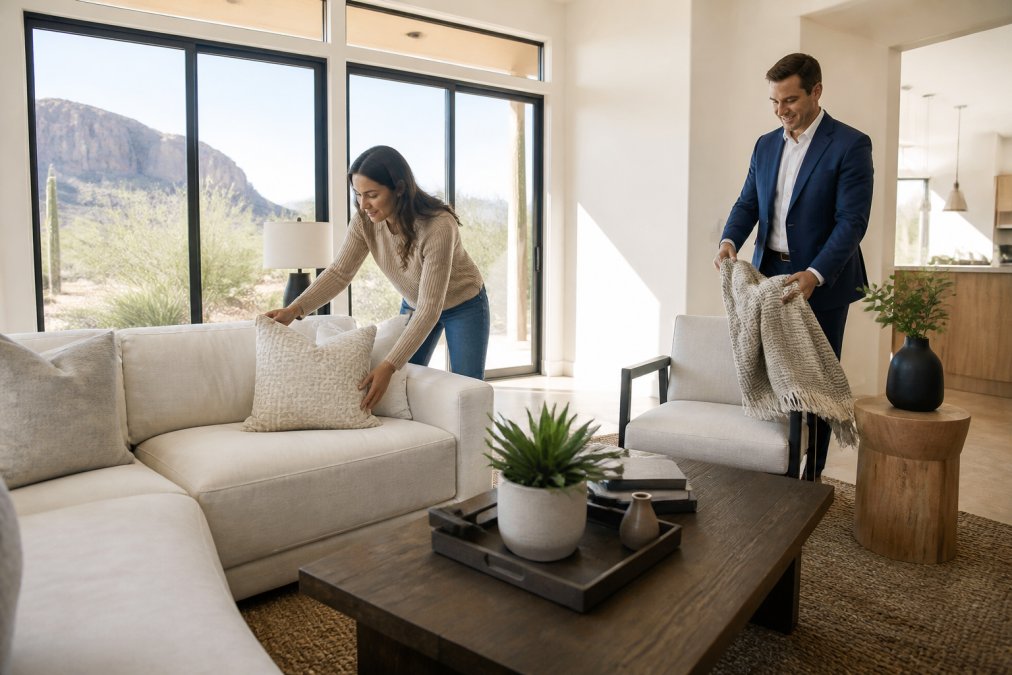
A real estate photography staging checklist is the pre-shoot routine that prepares a home so the camera captures flow, scale, and light instead of clutter. The best shoots are won before the photographer arrives. A common mistake is treating prep as a light tidy-up the morning of the session. In practice, prep starts days earlier and touches every room the lens will see.
Interior Prep: Decluttering, Lighting, and Flow
Interior prep comes down to three jobs: clear surfaces, open sightlines, and control the light. Property flow matters more than any single room, because wide-angle lens shots exaggerate whatever blocks a doorway or hallway. Turn on every lamp and replace dim bulbs so interior lighting reads warm and even. Remove personal items, fridge magnets, and counter appliances. What most guides miss is that small rooms photograph larger when furniture is pulled slightly away from walls, not pushed against them.
Exterior Prep: Curb Appeal and Desert Landscaping
Curb appeal is the first frame a buyer sees, so treat the front elevation like a stage. Clear gravel, hose down patios, and trim desert landscaping so it looks intentional rather than overgrown. Hide trash bins, garden hoses, and pool equipment. In the desert, gravel and stone read better than patchy grass. A pro tip: photograph the backyard pool before the wind picks up, since afternoon breezes ripple the water and dull the reflection.
Best Time of Day for Exterior Home Photos in the Desert
The best time of day for exterior home photos in the desert is early morning or the last hour before sunset, when the sun sits low and shadows soften. Midday sun is the enemy: it creates harsh contrast and blown highlights on stucco and gravel. Homes facing east shoot best in the morning; west-facing homes shoot best in the evening.
Golden Hour and Twilight Shoots
Golden hour is the short window of warm, low-angle light just after sunrise or before sunset, and it flatters every exterior. Twilight shoots go one step further: the photographer captures the home at dusk with interior lights glowing, then blends exposures so windows show warm light instead of black glass. This day-to-dusk editing is one of the highest-impact techniques in listing media. The U.S.
Hiring a Professional Real Estate Photographer: What to Look For
Hiring a professional real estate photographer means checking four things: a portfolio of similar properties, drone credentials, editing standards, and turnaround time. Ask to see full listing sets, not just hero shots. A photographer who only shows one perfect image may not deliver consistent quality across twenty.
- Portfolio fit: Look for desert homes, pools, and open floor plans like yours
- Licensing: Confirm drone work is flown by an FAA-licensed remote pilot
- Editing: Ask whether HDR processing and color correction are included
- Turnaround: Get delivery expectations in writing before booking
- Deliverables: Confirm high-resolution files sized for MLS, web, and print
Vetting a Photographer: Questions That Separate Pros From Hobbyists
Most agents ask whether the photographer "shoots HDR." A better question is how they handle a west-facing great room at 4 p.m. in July, when the window is a blown-out white rectangle and the interior is three stops dark. A skilled photographer will describe a specific workflow, bracketed exposures blended by hand, a flash-ambient blend, or a scrim to knock down the window, rather than promise "good editing."
Ask these before you book:
- How many listings have you shot in this market? Local experience matters because stucco, gravel, and pool reflections behave differently than the brick-and-siding homes in most photography portfolios.
- What is your turnaround, and what happens if a shoot is rained out? Get the reschedule policy in writing.
- Do you carry liability insurance? A drone crashing into a tile roof or a tripod through a window is a real risk, and the policy should name the photographer, not the agent.
- Who owns the images, and for how long? This is the question almost no one asks, and it is the one that causes disputes later.
Copyright and Image Ownership: The Clause Most Agents Miss
The one drawback of the cheapest option is usually consistency. A low rate often means rushed edits and flat lighting. For most sellers, the difference between a bargain shoot and a professional one shows up in click-through rates, not the invoice.
Aerial Photography and Drone Services for East Valley Listings
Aerial photography uses a camera mounted on a drone to capture a property and its surroundings from above. For East Valley listings, drone services show lot lines, mountain views, and neighborhood context that ground-level shots cannot. That context sells: buyers want to see how close a home sits to a wash, a golf course, or open desert.
FAA Part 107: What the Rule Actually Requires
Commercial drone work in the United States is regulated by the Federal Aviation Administration under Federal Aviation Administration Part 107 rules. The rule is more specific than most agents realize, and knowing the basics protects you from hiring an unlicensed operator.
- Remote pilot certificate: The person flying the drone must hold a current Part 107 remote pilot certificate with a small unmanned aircraft rating. A hobbyist registration is not enough for a paid listing shoot.
- Aircraft registration: The drone itself must be registered with the FAA if it weighs more than 0.55 pounds, and the registration number must be visible on the aircraft.
- Operating limits: Flights are capped at 400 feet above ground level, must remain within visual line of sight of the pilot or a visual observer, and cannot be flown over people who are not directly participating in the operation.
- Airspace authorization: Much of the Phoenix metro sits under Class B and Class D airspace tied to the international airport and nearby municipal fields. Flights in controlled airspace require prior FAA authorization, typically obtained through the Low Altitude Authorization and Notification Capability (LAANC) system.
- Waivers: Some limits, such as night operations or flight over people, can be waived, but the waiver must be granted before the flight, not after.
What Drone Shots Should and Should Not Do
Aerial shots are strongest when they complement, not replace, ground photography. Use them for the hero image and for lots with acreage or views. A drone image that shows the home as a tiny speck in a vast desert does not sell the home; it sells the desert. The best aerial frames keep the roofline readable and the lot boundaries obvious, with enough surrounding context to answer "what is next door?"
Copyright of Aerial Images
The same copyright rule that applies to ground photography applies in the air: the photographer owns the aerial images unless a written agreement says otherwise. Because drone shots are often the most expensive part of a media package, agents frequently assume they are buying the files outright. Confirm the license terms in the same conversation you have about ground photos, and check whether the aerial license covers reuse on a future listing or only the current one.
Drone coverage is a licensing question as much as a photography question. Verify the pilot's Part 107 certificate, confirm airspace authorization, and get the image license in writing before the flight.
3D Virtual Tours and Floor Plans: Essential Tools for Buyers
A 3D virtual tour is an interactive, walkable model of a home that lets buyers move through rooms online, and it has become a standard tool for serious listings. Floor plans pair with tours to answer the question photos cannot: how does the space actually flow? Out-of-state buyers rely on these tools most, since they cannot walk the home in person.
Post-Processing Standards: HDR, Color Correction, and Day-to-Dusk Editing
Post-processing is where good listing photos become great ones, and it is the step most sellers never ask about. HDR processing blends multiple exposures so windows, shadows, and highlights all read correctly in one image. Color correction fixes the green or orange cast that desert light and interior bulbs create. Exposure blending is what makes a bright window and a dark corner visible in the same frame.
Conclusion
Selling in the East Valley means competing against listings that already use professional photography, drone coverage, and virtual tours. If your photos are flat, your home will sit. Bernie Krause helps sellers get this right, from pre-shoot staging advice to coordinating media that makes a listing stand out, and helps buyers find the right home in communities like Chandler, Gilbert, and Scottsdale.
Frequently Asked Questions
What makes a real estate listing photo professional?
Professional listing photos use proper composition, wide-angle lenses, and balanced lighting to show a home's full scale and flow. They avoid harsh shadows and blown-out windows through techniques like HDR processing and exposure blending. High-resolution images with accurate color correction and day-to-dusk editing help buyers see the property at its best. A professional photographer also knows how to highlight architectural details and curb appeal without distortion.
How do I prepare my home for a professional photoshoot?
Start with a real estate photography staging checklist: declutter all surfaces, remove personal items, and clean windows to maximize natural light. Turn on all interior lights and replace burned-out bulbs. For exteriors, tidy desert landscaping, clear driveways, and remove cars. Schedule the shoot during the best time of day for exterior home photos, often early morning or late afternoon, to avoid harsh shadows. Small touches like fresh flowers or a welcome mat add warmth.
Should I use natural light or artificial light for real estate photos?
Both have a place. Natural light creates a warm, inviting feel but can cause uneven exposure in rooms with bright windows. Artificial light fills shadows and balances interior spaces, especially in darker rooms or on cloudy days. Many professional real estate photographers combine the two: they open blinds for natural light and use flash or continuous lights to reduce shadow reduction and highlight property flow. The goal is a bright, consistent look across all listing photos.
How does high-quality photography impact home sale prices?
High-quality photography can significantly impact a home's sale price by attracting more buyers and generating more showings. Professional images make a strong first impression online, where most buyers start their search. Well-lit, properly composed listing photos can lead to faster sales and potentially higher offers because they showcase the property's best features. While exact price increases vary by market, investing in professional photography often pays off through increased interest and competitive bids.
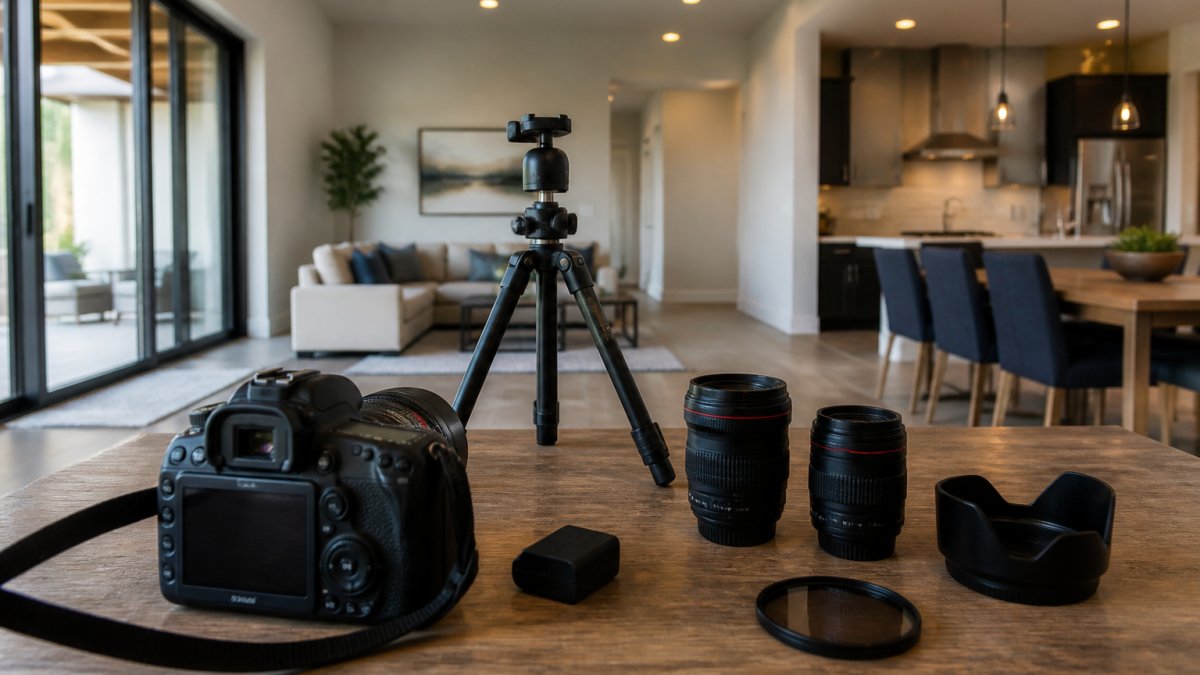
Do I need a wide-angle lens for real estate photography?
A wide-angle lens is essential for real estate photography because it captures more of a room in a single frame, making spaces feel larger and showing property scale. Most pros use lenses between 16mm and 24mm on full-frame cameras. However, too wide can distort edges, so careful composition is key. For small rooms or tight spaces, a wide-angle lens helps buyers see the layout and flow without needing multiple photos.