 how-to
How to Stage a Small House for Sale
Table of Contents
- Why Staging a Small House Matters
- Decluttering Tips for Home Sellers
- Furniture Arrangement for Small Living Rooms
- Low-Cost Home Staging Ideas That Work
- Lighting, Color, and Visual Depth
- Curb Appeal and First Impressions
- Post-Staging Maintenance and Open House Readiness
- Conclusion
Last Updated: August 27, 2026
Why Staging a Small House Matters
When you stage a small house for sale, you're not just tidying up. You're solving a fundamental problem: buyers struggle to envision themselves in compact spaces. The difference between a cluttered small home and a strategically staged one often comes down to thousands of dollars in final sale price.
Small homes face unique challenges in the real estate market. Limited square footage means every visual choice, from furniture placement to paint color, either expands the perceived space or shrinks it further. Buyers walking through an unstaged small house see obstacles. They see wasted space, cramped corners, and nowhere to put their own belongings. A properly staged small house tells a different story: it shows possibility, flow, and livable square footage.
This guide from Bernie Krause covers the essential techniques for staging a small house for sale. Whether you're selling a compact townhome in the East Valley or a starter home in Chandler, these strategies apply. The goal is to maximize perceived space, highlight your home's best features, and create an emotional connection that translates to competitive offers.
Decluttering Tips for Home Sellers
Decluttering is the foundation of staging a small house. You cannot stage around clutter, you must remove it first. Most sellers underestimate how much stuff they've accumulated. What feels "normal" to you reads as chaotic to a buyer.
Start by removing 30-50% of visible items from every room (realtor.com). This is aggressive, but it works. Go through closets, nightstands, kitchen counters, and shelving. Remove personal photographs, collections, excess decorations, and items that don't serve a functional purpose. The goal is to create visual calm, not emptiness.
Common decluttering mistakes:
- Hiding clutter in cabinets and closets (buyers open them)
- Keeping seasonal items visible (store them off-site)
- Displaying hobby collections (they distract from the home itself)
- Leaving countertops covered with appliances and gadgets
Donate, sell, or store items you're not taking with you. Rent a small storage unit if necessary, it's cheaper than losing thousands on your sale price. A storage unit costs $50-150 per month; a low offer from a buyer who felt cramped costs you far more.
Focus on these high-impact areas first: kitchen counters, bathroom counters, bedroom nightstands, and living room shelving. These are the spaces buyers scrutinize most closely. Clear counters should be nearly empty, a small plant or decorative bowl, nothing more.
Furniture Arrangement for Small Living Rooms
Furniture arrangement makes or breaks a small house sale. Poor placement makes rooms feel cramped and dysfunctional. Strategic arrangement creates flow and reveals the room's actual potential.
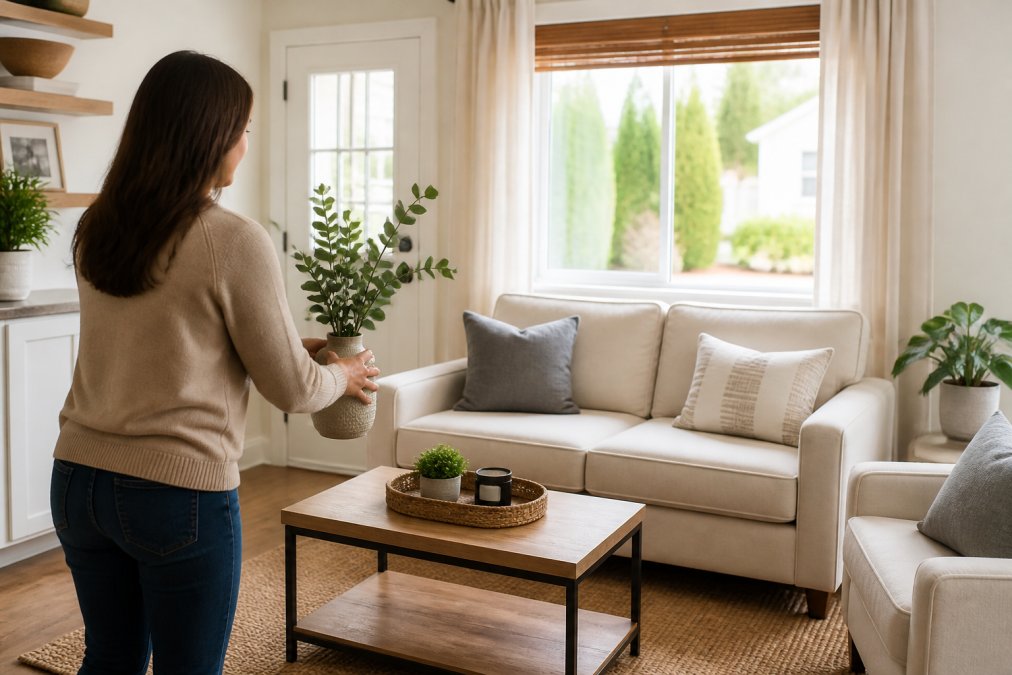
The key principle: furniture should define zones without blocking sightlines. In a small living room, this means pulling furniture away from walls slightly and angling pieces to create conversation areas. Avoid pushing everything against walls, this actually makes small rooms feel smaller and more institutional.
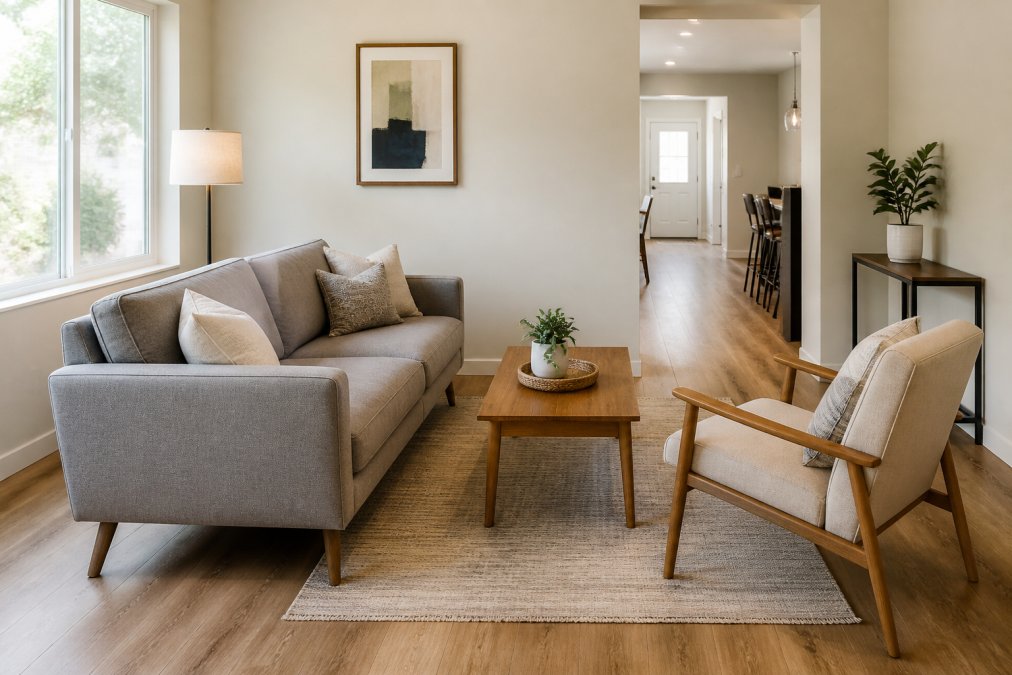
Furniture sizing for small spaces:
- Choose a sofa no wider than 72 inches (measure your doorways first) (apta.org)
- Use a coffee table that's roughly two-thirds the sofa length
- Select one accent chair instead of two (fewer pieces = more open space)
- Avoid oversized sectionals unless the room is 200+ square feet
- Use vertical storage (tall bookshelves) instead of horizontal pieces
Remove extra furniture entirely. If your living room has a sofa, armchair, ottoman, side table, and coffee table, remove the ottoman and one side table. Buyers need to see the floor and imagine their own furniture in the space.
Arrange furniture to create a clear focal point. This might be a fireplace, window, or entertainment area. All seating should orient toward this focal point. This arrangement immediately signals that the space is functional and livable.
Measure doorways, hallways, and room dimensions before arranging anything. Many small houses have awkward layouts. Work with the architecture rather than against it. If a room has a narrow entry, arrange furniture to minimize the visual impact of that constraint.
Low-Cost Home Staging Ideas That Work
You don't need to spend thousands to stage a small house effectively. Many of the most impactful staging techniques cost little or nothing.
Free and low-cost staging tactics:
- Deep clean every surface (free, high-impact)
- Declutter ruthlessly (free)
- Rearrange furniture you already own (free)
- Open all curtains and blinds during showings (free)
- Remove personal photographs and family memorabilia (free)
- Paint accent walls in neutral tones ($50-100 per wall)
- Add fresh plants or flowers ($20-40)
- Replace old cabinet hardware ($30-80)
- Add new light bulbs for brighter rooms ($10-20)
- Repaint front door ($30-50)
Focus your budget on items that affect first impressions and key rooms. The front door, kitchen, and primary bedroom deserve more investment than a guest bedroom. Buyers make emotional decisions in these spaces.
Fresh paint in neutral colors is one of the highest-ROI staging investments. Neutral doesn't mean beige everywhere, it means colors that don't distract. Soft whites, warm grays, and light taupes work well. Paint one accent wall if the room feels too plain, but avoid bold colors that polarize buyers.
Lighting improvements cost little but feel expensive. Replace dim bulbs with bright LED bulbs (60-75 watts equivalent). Add a table lamp in corners that feel dark. Open all window treatments to maximize natural light. Bright, well-lit spaces feel larger and more welcoming.
Plants add life to small spaces without clutter. Choose 2-3 large plants (fiddle leaf figs, snake plants, or pothos) rather than many small ones. Place them in corners to draw the eye upward and create visual height.
Lighting, Color, and Visual Depth
Lighting and color create the perception of space more than any other factor. A small room with bright, neutral tones and excellent lighting feels 20% larger than the same room painted dark with poor lighting.
Natural light is your strongest asset. Open all curtains and blinds during showings and open house events. If you have heavy drapes, replace them with light, neutral roller shades or sheers. These allow light through while maintaining privacy.
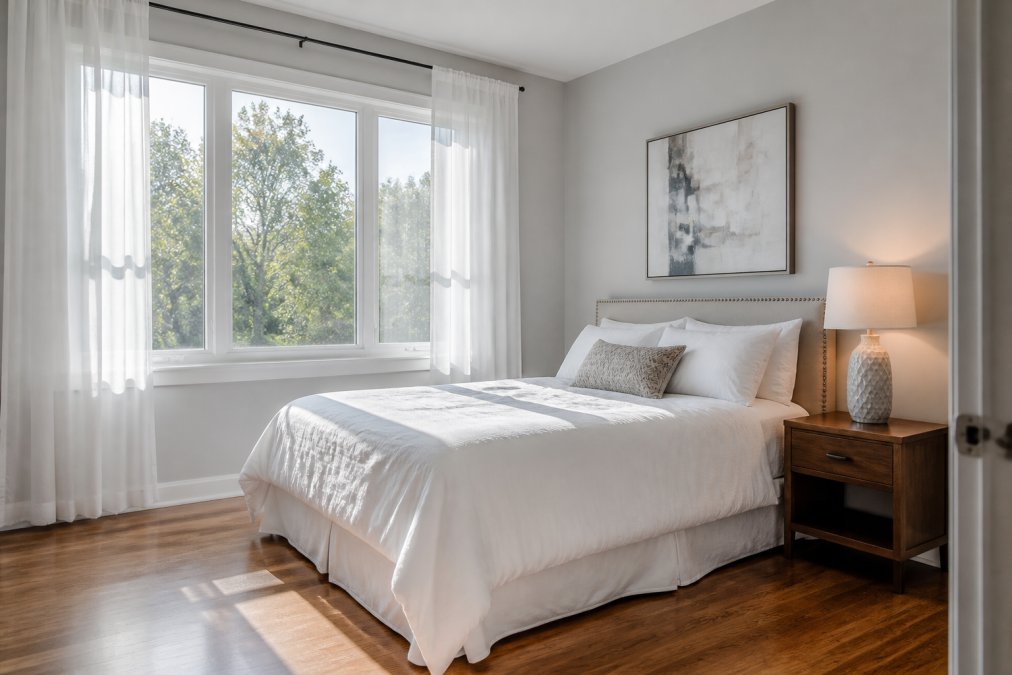
Artificial lighting matters equally. Most small homes have inadequate lighting. Add table lamps in corners, under-cabinet lighting in kitchens, and wall sconces in bathrooms. Layered lighting, overhead, task, and accent, makes small rooms feel more spacious and functional.
Color psychology affects buyer perception significantly. Light, neutral colors recede visually and make spaces feel larger. Dark colors advance and make spaces feel smaller. Avoid painting small rooms in dark tones, bold colors, or trendy hues that might feel dated.
Color strategy for small houses:
- Walls: soft whites, warm grays, light taupes, pale blues
- Trim: white or off-white (creates visual separation)
- Ceilings: white or very light (makes rooms feel taller)
- Accent colors: one neutral accent wall maximum
Create visual depth by varying the color slightly between rooms. A hallway slightly darker than the living room creates depth. A bedroom slightly warmer than a bathroom adds interest without clutter.
Mirrors expand perceived space. Place a large mirror opposite a window to reflect light and create the illusion of additional square footage. Avoid placing mirrors where they reflect clutter or create an unflattering angle.
Minimalist decor creates visual depth. A few well-chosen pieces (one piece of art, one decorative object per shelf) feels intentional and spacious. Overcrowded shelving and walls feel chaotic and cramped.
Curb Appeal and First Impressions
Buyers decide within seconds of pulling up whether they're interested in your home. Curb appeal is the foundation of successful staging. A small house with excellent curb appeal gets more buyer interest and showings.
The front entrance deserves your staging focus. Paint the front door a fresh, inviting color (white, soft gray, or neutral tone). Clean or replace house numbers. Add a potted plant or two flanking the door. Ensure the porch is spotless, sweep, power wash if possible, and remove any clutter.
Landscaping should be neat and minimal. Overgrown plants make small houses feel cramped from the outside. Trim bushes, remove dead plants, and edge garden beds. A small lawn should be mowed and edged. Mulch in garden beds looks intentional and maintained.
Remove anything that signals neglect: broken fence boards, peeling paint, dead plants, or visible clutter. These details undermine everything else you've done inside.
The driveway and walkway are critical. Pressure wash both if possible. Repair cracks or stains. Remove weeds from driveway edges. A clean, well-maintained exterior signals that the home has been cared for inside as well.
Lighting matters for evening showings. Add solar lights along the walkway or uplighting on the front of the home. Well-lit homes feel safer and more inviting.
Post-Staging Maintenance and Open House Readiness
Staging isn't a one-time effort. You must maintain the staged appearance until the home sells. This requires discipline and consistency.
Daily maintenance checklist:
- Make all beds with neutral bedding
- Clear kitchen counters completely
- Ensure no dishes in the sink
- Close closet doors
- Remove clutter from floors
- Wipe down bathroom counters
- Empty trash cans
- Ensure all lights work
During showings and open houses, the home must be immaculate. Schedule showings during daylight hours when possible, natural light is your best staging tool. If evening showings are necessary, turn on all lights, including lamps in corners and under-cabinet lighting.
Remove personal items before each showing. Put away family photos, children's toys, and anything that reveals your lifestyle. Buyers need to project themselves into the space, not see your family's story.
Odor control is critical in small homes. Cooking smells, pet odors, and musty scents linger in compact spaces. Avoid strong air fresheners, they signal that you're covering something up. Instead, ensure good ventilation, remove pet odors completely, and avoid cooking pungent foods before showings.
Temperature matters. A cool home (68-70 degrees) feels more comfortable than a warm one. Warm homes feel stuffy in small spaces. Adjust the thermostat before each showing.
Keep the home staged for 2-4 weeks after listing. Most offers come in the first two weeks. After that, you can relax staging slightly, but maintain the basic decluttered, neutral appearance.
Staging a small house for sale requires strategic thinking, not expensive renovations. The techniques covered here, decluttering ruthlessly, arranging furniture for flow, optimizing lighting and color, and maintaining curb appeal, work because they address how buyers actually perceive small spaces.
When you're ready to sell, Bernie Krause can guide you through the entire process. With deep knowledge of the East Valley market, Bernie helps sellers present their homes strategically and achieve top dollar. Whether your home is in Chandler, Gilbert, or Scottsdale, proper staging combined with expert marketing makes the difference between a slow sale and multiple offers. Contact Bernie Krause to discuss your home sale strategy today.
Frequently Asked Questions
What are the biggest mistakes to avoid when staging a small home?
The most common mistakes are overcrowding rooms with too much furniture, using dark or bold paint colors that shrink the space visually, and leaving personal items and clutter visible. Avoid blocking windows or natural light sources, and don't arrange furniture against walls, floating pieces create better flow and spatial awareness. Skip overly trendy decor that dates quickly; neutral, timeless pieces appeal to more buyers and help them envision their own lives in the space.
How can I make a small room look larger for potential buyers?
Use a neutral palette on walls and large surfaces to create visual continuity. Maximize natural light by keeping windows clear and adding sheer curtains. Choose proportional furniture scaled to the room's size, oversized pieces overwhelm small spaces. Arrange furniture to create clear pathways and focal points rather than blocking sightlines. Add mirrors strategically to reflect light and create the illusion of depth. Declutter aggressively so empty floor space is visible, which makes rooms feel more spacious.
Is home staging worth the investment for smaller properties?
Yes, staging typically delivers strong return on investment for smaller homes. Small spaces are harder to visualize as furnished, so staging helps buyers see the potential. Properties that are show-ready and well-staged sell faster and often command higher prices. Even low-cost staging, decluttering, rearranging existing furniture, and optimizing lighting, can significantly increase buyer appeal and help your home compete in the real estate market.
What is the most important room to stage in a small house?
The kitchen and primary bedroom are typically the highest-impact rooms for buyers. In small homes, the kitchen often serves as a central gathering space, so keeping it clean, uncluttered, and well-lit is essential. The primary bedroom should feel like a peaceful retreat with minimal decor and proportional furniture. The entryway also matters, it's the first impression buyers have, so ensure it's welcoming, clutter-free, and well-lit to set a positive tone for the entire showing.
This article was written using GrandRanker