
 how-to
Chandler Home Sale Prep: How to Sell Your House Fast
Last Updated: October 29, 2026
Quick Summary
To prepare a Chandler home for a quick sale, fix must-do safety and inspection issues first, then declutter, deep clean, and stage the main rooms. Gather your repair records and permits before listing so buyers can verify the home's condition.
- Sort work into must-do, should-do, and nice-to-have groups, and finish the must-do list first.
- Fix inspection and safety items like leaks, broken outlets, and failing HVAC, since they can stall a deal.
- Declutter by packing away about half of what is in closets so buyers can see the storage.
- Close west-facing blinds in the afternoon and keep the house cool for summer showings.
- Gather repair records, permits, and disclosure forms before listing so the price is backed by documentation.
Table of Contents
- Start With a Prioritized Plan for Your Chandler Home Sale
- Chandler Home Selling Checklist: Your Step-by-Step Preparation Order
- Repairs to Make Before Selling a House: What Pays Off and What to Skip
- Declutter, Deep Clean and Stage Each Room for Showings
- Home Staging Tips for a Quick Sale in the Desert Climate
- How to Price a Home to Sell Fast Against Nearby Comparable Sales
- Chandler Curb Appeal, Landscaping and Seller Paperwork Before You List
- Booking Your Chandler Listing Date and Preparing for First Showings
- Frequently Asked Questions
Start With a Prioritized Plan for Your Chandler Home Sale
Selling a house fast in Chandler comes down to one thing: making the home easy for a buyer to say yes to.
Most sellers start in the wrong place. They jump to paint colors or a new front door before dealing with the things buyers notice first. A better approach is to sort your work into three groups:
- Must do: Fix safety issues, repair anything that would stop a buyer's inspection, and clean thoroughly.
- Should do: Declutter, stage the main rooms, and handle small visible repairs like scuffs and loose fixtures.
- Nice to have: Cosmetic upgrades, landscaping extras, and minor improvements that add polish.
Work through the "must do" list first. Those items decide whether buyers stay interested at all.
The Arizona Department of Real Estate consumer resources explain the disclosure rules sellers need to know before listing, so it helps to understand them early. For broader strategies on speeding up a sale, see Fast Home Selling Strategies for Arizona Homeowners.
Before you start, set a target list date. Working backward from that date keeps each task on schedule.
Chandler Home Selling Checklist: Your Step-by-Step Preparation Order
Preparing a home for a quick sale works best in a set order. Each step makes the next one easier, and you avoid paying for work you later have to redo.
- Walk the house as a buyer. Note every stain, crack, and broken item.
- Handle repairs and inspection issues. Fix what buyers will flag.
- Declutter every room. Remove half of what is in closets and on counters.
- Deep clean from top to bottom. Start with ceilings and work down to floors.
- Touch up paint and fixtures. Fresh neutral paint and new cabinet pulls go a long way.
- Stage the main rooms. Focus on the living room, primary bedroom, and kitchen.
- Prepare the exterior. Clean up the yard, fix walkways, and refresh the entry.
- Gather paperwork. Pull together records for repairs, upgrades, and permits.
Following this order keeps you from cleaning a room you will later need to paint.
Repairs to Make Before Selling a House: What Pays Off and What to Skip
Not every repair is worth doing before you list. The right choice depends on two questions: does the fix change how buyers see the home, and does it change how the inspection goes? Sort every potential repair into one of three buckets before you spend a dollar.
Bucket 1: Fix it, inspection and safety items. These are the repairs that show up on a buyer's inspection report and either kill the deal or force a credit. They rarely add value, but skipping them costs you leverage. Common examples:
- Active leaks, running toilets, and dripping water heaters
- Missing or damaged outlet covers and non-working GFCI outlets
- Broken windows, failed window seals, and doors that will not latch
- Roof damage, missing shingles, and active pest issues
- HVAC problems, in a desert market, a failing AC is a deal-stopper, not a negotiating chip
Bucket 2: Fix it, high-visibility, low-cost items. These are the fixes buyers notice in the first walkthrough and in photos. They are cheap relative to the impression they make:
- Scuffed or marked interior walls (a gallon of neutral paint and a few hours)
- Cracked or missing tile and damaged grout
- Loose cabinet pulls, dated light fixtures, and burned-out bulbs
- Stained or torn screens, worn caulk lines, and dirty vent covers
Bucket 3: Skip it, or disclose and price accordingly. Major renovations rarely return their full cost in a quick sale, and buyers discount homes that look 'half-renovated.' A common pattern is to skip:
- Full kitchen or bathroom remodels when the room is functional and clean
- Specialty upgrades (built-in wine storage, custom closets) that appeal to a narrow group
- Replacing working systems just because they are older
For anything in Bucket 3 that is a genuine defect, a roof near the end of its life, foundation movement, or an aging water heater, get two written quotes from licensed contractors. Then make a deliberate choice: fix it and document the work, or disclose it and adjust your price to reflect it. Hiding a known defect is not a strategy; it invites renegotiation, inspection surprises, and, in the worst case, disclosure liability after closing.
Keep every receipt, permit, and contractor invoice for the work you do complete. That paper trail becomes part of your seller documentation and reassures buyers that the work was done properly.
The article sorts possible repairs into three buckets, which can be summarised as follows.
| Bucket | What it covers | Recommended action |
|---|---|---|
| Fix it: inspection and safety | Leaks, outlets, windows, roof, pests, HVAC | Fix; these can stall the deal |
| Fix it: high-visibility, low-cost | Scuffed walls, tile, fixtures, screens | Fix; cheap relative to impression |
| Skip or disclose | Full remodels, narrow-appeal upgrades, working systems | Skip, or disclose and price accordingly |
Declutter, Deep Clean and Stage Each Room for Showings
Buyers need to see space, light, and storage. Clutter makes rooms look smaller and houses look harder to maintain.
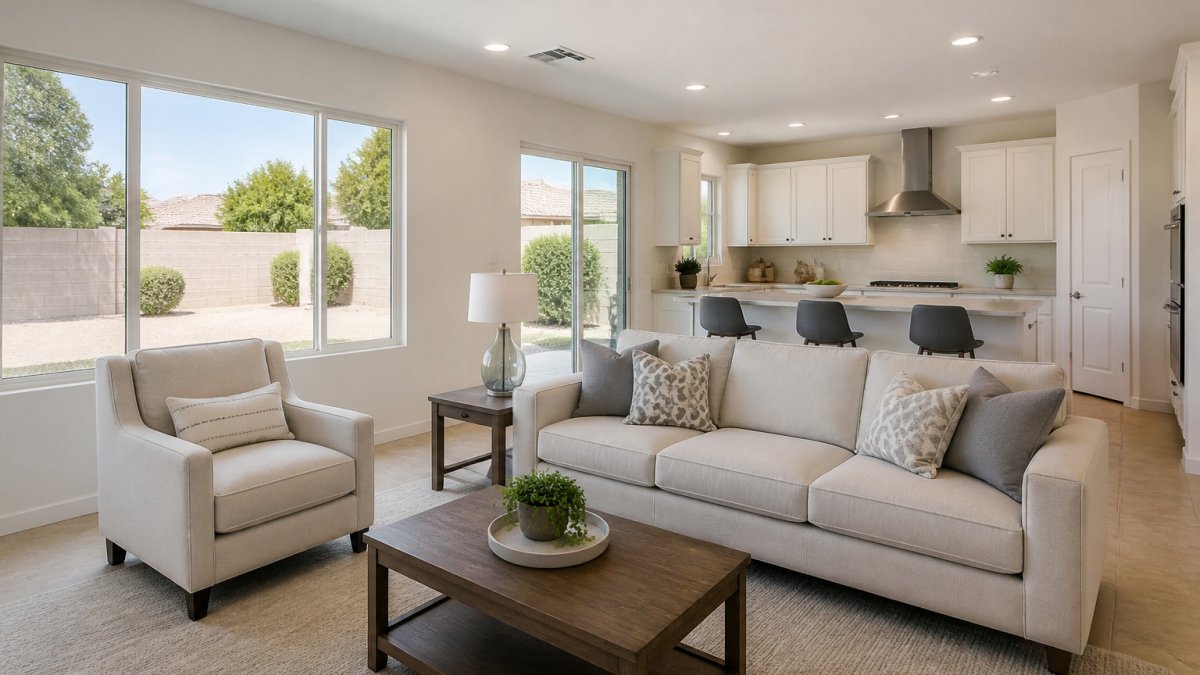
Start by removing personal items like family photos, collections, and medications. Then clear counters, bathroom vanities, and the tops of dressers. Pack away about half of what is in closets so buyers can see the storage they are paying for.
Deep cleaning should come after decluttering. Clean baseboards, window tracks, light switches, and grout. Desert dust builds up quickly in Chandler, so pay close attention to ceiling fans, vents, and window sills.
When you stage, prioritize these rooms:
- Living room: Arrange furniture to show the space clearly.
- Primary bedroom: Make the bed with simple, fresh bedding.
- Kitchen: Keep counters clear except for one or two small items.
- Entry: Create a welcoming first impression.
Home Staging Tips for a Quick Sale in the Desert Climate
Staging in the Arizona desert needs a few adjustments. Bright sun can fade furniture, wash out photos, and show every dust mark.
Close blinds or use light curtains on west-facing windows during the afternoon. Keep interiors cool and comfortable, because buyers who tour in summer heat will remember how the house felt.
Stage with neutral colors and simple décor. Light, airy rooms photograph well and feel larger in person.
Plan showings around the weather. Many Chandler buyers prefer cooler morning or evening appointments, and weekend showings often draw the most traffic.
How to Price a Home to Sell Fast Against Nearby Comparable Sales
Price is one of the biggest levers on how fast a home sells, but pricing well is only part of the job.
Step 2: Adjust honestly. Compare your home against each sale on the features buyers actually pay for: updated kitchen and baths, roof and HVAC age, pool or outdoor living space, and lot position. Be conservative.
Step 3: Position against active listings, not just sold ones. Your real competition is what a buyer can tour this weekend.
Step 4: Prepare the documentation that defends your price. This is where most sellers leave money and time on the table. Before you list, assemble:
- Records of major repairs and upgrades, with dates and contractor names
- Permits and final inspection sign-offs for any permitted work
- Appliance manuals, warranties, and service records
- HOA documents, rules, and any pending assessments
- Utility bills for the past year, helpful for buyers comparing cooling costs in a hot climate
- Your completed seller disclosure forms, with known issues documented honestly
Step 5: Understand your disclosure obligations. Arizona sellers are required to disclose known material facts about the property.
Step 6: Choose a strategy, not just a number. A competitive price near the top of the adjusted range is one approach sellers consider, while an aggressive price can invite lowball offers. Some sellers also weigh alternatives, a traditional listing, an as-is sale, or a cash-offer route, each trading speed and effort against likely proceeds. A local agent can run a current comparable analysis for your specific street and property type.
Chandler Curb Appeal, Landscaping and Seller Paperwork Before You List
The exterior is the first thing buyers see, so it deserves attention. In the Chandler heat, landscaping needs to be both attractive and water-wise.
Focus on these exterior tasks:
- Trim overgrown shrubs and remove dead plants.
- Replace cracked walkway pavers and clean the driveway.
- Refresh the front door with paint or new hardware.
- Use drought-tolerant plants and desert-appropriate mulch.
- Check irrigation to make sure it works and does not leave soggy spots.
Seller paperwork also needs to be ready before you list. Gather these documents:
- Records of major repairs and upgrades
- Permits for work done on the home
- Appliance manuals and warranty information
- Required seller disclosure forms
Having paperwork ready helps keep the sale moving once a buyer makes an offer.
Booking Your Chandler Listing Date and Preparing for First Showings
Choose a listing date only after your home is clean, repaired, and staged.
Before listing, consider whether you want a local agent who knows Chandler pricing and buyer habits. Benefits of Working With a Local Chandler Real Estate Agent covers how local knowledge can help sellers. If you are also planning your next purchase, How to Increase Home Value in Chandler Before Selling covers the improvements that matter most.
Once you list, keep the house ready for showings at all times. Keep counters clear, beds made, and lights on. Ask your agent for feedback after each showing so you can adjust quickly.
Start by writing your list-date target and the three things you will finish first. Those two steps set the pace for everything else.
Frequently Asked Questions
What is the hardest month to sell a home?
Sellers in the Phoenix metro often find the summer months slowest because extreme heat keeps some buyers from touring homes during the day, and many families wait until the new school year starts. Spring and early fall usually bring more showings and stronger buyer traffic. In Chandler, scheduling evening and weekend showings during the hottest months can help you keep buyer activity steady. Your agent can review recent days-on-market data for your neighborhood to help you choose a listing date.
How long does it take to prepare a home for sale?
Most sellers need about four to eight weeks to prepare a home, depending on how many repairs, cleaning jobs and projects are on the list. Start with paperwork and major repairs, then move into decluttering, deep cleaning and staging so the home looks its best at listing. Exterior work such as landscaping and touch-up painting can often be scheduled in the same window. Building a timeline with your listing date in mind keeps the process organized and prevents rushed decisions.
Which repairs should I make before selling my home?
Focus on repairs that buyers notice quickly and that could raise concerns during inspection, such as leaking faucets, broken outlets, damaged window screens, loose handrails and worn caulk. Fresh paint in neutral colors and replacing dated fixtures often pay off well relative to their cost. Major system repairs should be discussed with your agent, since disclosure rules and buyer negotiations will affect whether it makes sense to fix them before listing or price the home accordingly.
How do I price my home to sell quickly?
Pricing to sell quickly usually means setting a price that matches recent comparable sales in your Chandler neighborhood, including homes with similar size, age, condition and lot. A price that is too high can keep buyers from touring the home, while a price that is too low may leave money on the table. Your agent can prepare a comparative market analysis that shows recent sales, active listings and the local market pace so you can choose a price with confidence.