 how-to
Avoiding Builder Bias in New Construction
Table of Contents
- What Builder Bias Really Means in New Construction
- How Sunk Cost Fallacy Clouds Your Decisions
- Identifying Builder-Grade Materials and Upgrade Traps
- Why You Need Your Own Buyer's Agent for New Construction
- Evaluating Builder-Preferred Lenders: Pros and Cons
- Creating Your New Construction Home Inspection Checklist
- Contractual Safeguards and Change Order Management
- Conclusion
What Builder Bias Really Means in New Construction
Builder bias is the systematic preference for a builder's recommendations, financing options, and material choices that often leads homeowners to make decisions contrary to their own interests. Builders have relationships with specific lenders, material suppliers, and contractors, and they've negotiated volume discounts. Recommending alternatives creates friction in their process, so the incentive is built into the system: push you toward what works for them.
This problem compounds when you're a first-time buyer. You don't have a reference point to compare the builder's lender terms against alternatives or evaluate whether material selections are truly standard. That information asymmetry is where bias thrives. Avoiding builder bias is entirely within your control once you understand how it works and where it shows up.
How Sunk Cost Fallacy Clouds Your Decisions
The sunk cost fallacy is a psychological trap that makes you continue investing in a decision because you've already invested time, money, or emotion, even when continuing no longer makes rational sense. In new construction, this becomes particularly dangerous.
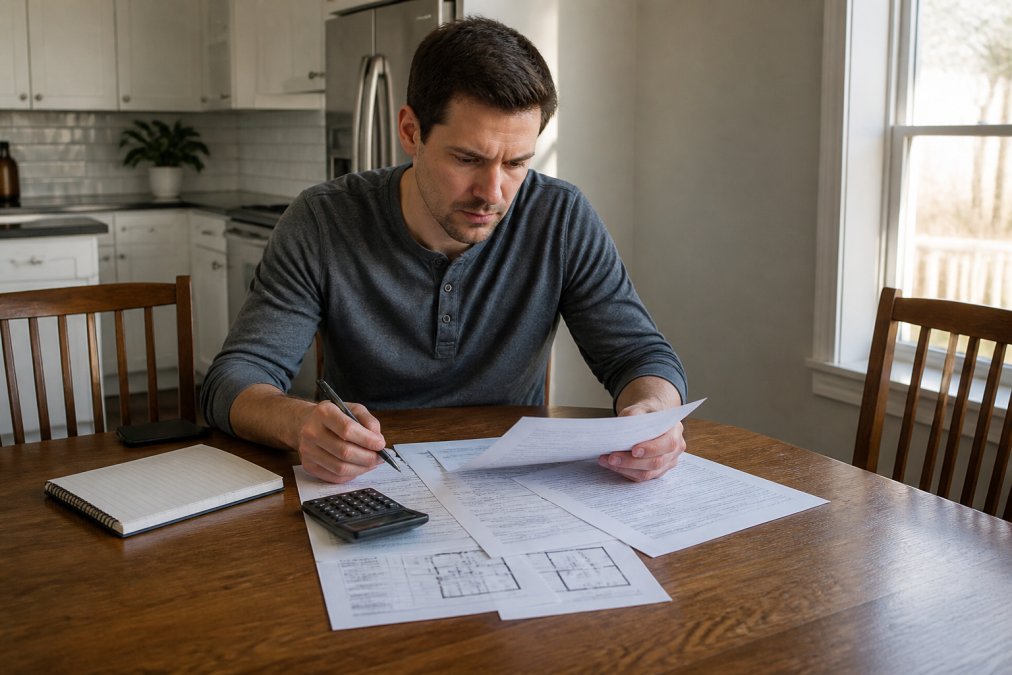
You've spent months selecting a lot, attending design meetings, and making deposit payments. By the time you discover an issue, overpriced financing, material quality concerns, or contractual terms that favor the builder, you've already sunk significant resources. The psychological pull to "just move forward" becomes overwhelming. But that sunk cost is gone regardless of your next decision. Paying another 0.5% on your mortgage rate doesn't recover your deposit.
The antidote is recognizing this bias when it appears. You'll feel it as a voice saying, "We've come this far, we might as well just accept it." That's the signal to pause and evaluate the current decision on its own merits, independent of what came before. Experienced agents build checkpoints into the process specifically to interrupt this fallacy, asking hard questions at critical moments: Is this financing truly competitive? Are these materials actually standard, or are we being upsold?
Identifying Builder-Grade Materials and Upgrade Traps
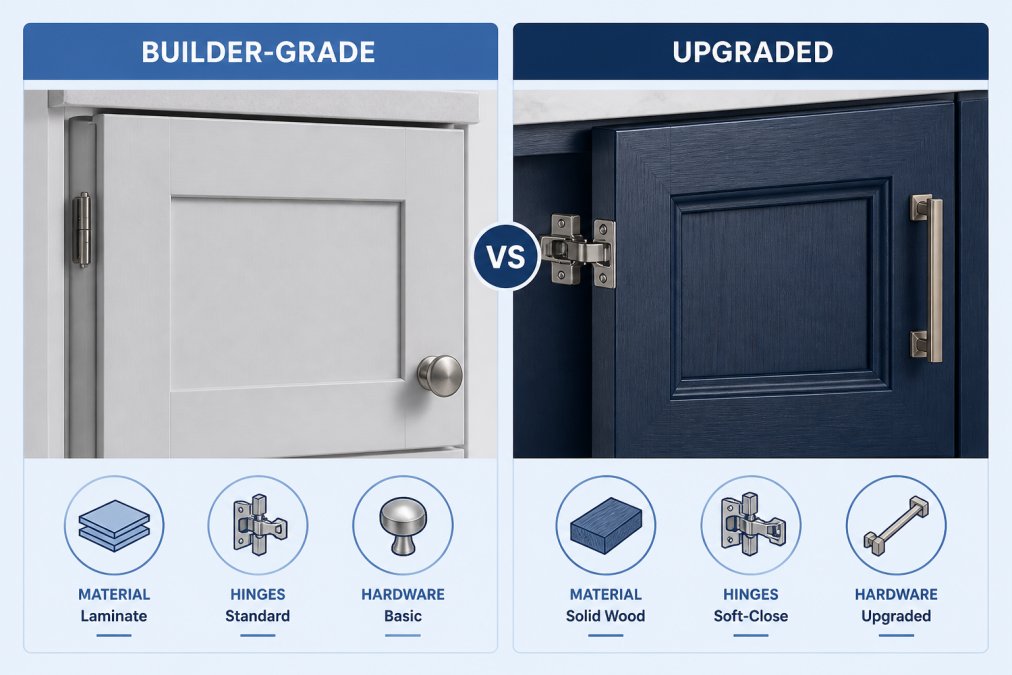
Builder-grade materials are the baseline finishes a builder includes in the base price of a home. They're selected for cost-effectiveness and durability at scale, not aesthetic appeal or longevity. The trap isn't builder-grade materials themselves, it's the pricing on upgrades. A builder might offer a cabinet upgrade for $8,000 that you could source and install independently for $4,500.
Common upgrade traps include flooring (basic laminate or vinyl upgraded to tile or luxury vinyl at 40-60% markups), countertops (laminate versus quartz at double market rates), cabinetry (semi-custom pricing assuming no alternatives), and appliances (higher-efficiency systems quoted at premium pricing). The psychology works because you're making decisions under time pressure, in a sales environment, without comparison data.
The practical defense: before you're deep in the design process, get independent quotes on major upgrades. Know the market rate. When the builder presents an upgrade price, you'll immediately see whether it's competitive or inflated.
Why You Need Your Own Buyer's Agent for New Construction
A buyer's agent for new construction is a licensed real estate professional who represents your interests exclusively, not the builder's. The builder's sales agent is incentivized to close the deal, maximize the price, and minimize friction. Your buyer's agent is incentivized to ensure you get fair terms, avoid hidden costs, and understand every decision you're making.
The builder's sales agent will recommend the builder's preferred lender, steer you toward higher-margin upgrades, downplay contractual terms that favor the builder, and pressure you to decide quickly. Your buyer's agent will shop lenders independently, help you evaluate which upgrades add value, review the purchase agreement and flag unfavorable clauses, and advise you on realistic timelines.
One common objection: "Doesn't the builder pay the agent's commission anyway?" Yes, typically the builder pays commission from the sale proceeds. But your agent's loyalty is to you, not the builder. They don't benefit if you overpay for upgrades. Bernie Krause understands the specific dynamics of builder relationships, contractual language, and financing structures. That experience is invaluable when navigating your first new construction purchase.
Evaluating Builder-Preferred Lenders: Pros and Cons
Builders often have preferred lender relationships that may offer incentives like rate discounts or waived fees. But that doesn't mean the terms are best for you.
Pros of builder-preferred lenders: Speed (these lenders know the builder's documentation), simplified process, possible incentives, and familiarity with the builder's team.
Cons of builder-preferred lenders: Limited negotiation leverage, potentially higher rates, less incentive to compete, bundled services at higher-than-market rates, and a conflict of interest where the lender prioritizes the builder's timeline over your financial outcome.
The practical approach: get pre-approved by your preferred lender before engaging with the builder. When the builder offers their preferred lender, you have a comparison. If the builder's lender can beat your pre-approval terms, great. If not, you have documentation that you shopped independently. Many builders will accept your lender if you're already pre-approved.
Creating Your New Construction Home Inspection Checklist
A new construction home inspection checklist is a detailed evaluation tool that covers items specific to newly built homes. Standard home inspections focus on identifying defects and wear. New construction inspections focus on verifying proper installation, material quality, and adherence to specifications and building codes.
Key areas include: structural and foundation (cracks, settling, water intrusion), electrical (outlets, switches, GFCI outlets, panel labeling), plumbing (fixture function, water heater, drain slopes), HVAC (system cycling, thermostat function, ductwork sealing), interior finishes (drywall, paint, flooring, cabinets, doors), and exterior (siding, windows, grading, gutters).
The critical difference: hire an independent inspector, not someone referred by the builder. The builder's preferred inspector has an incentive to pass the home so the builder can close on schedule. An independent inspector has no such pressure. The cost, typically $400-$800 depending on home size, is one of the best investments you'll make.
Contractual Safeguards and Change Order Management
New construction contracts are heavily weighted toward the builder. Understanding key provisions is essential to avoiding builder bias in the contractual structure itself.
Key contractual safeguards to negotiate: Completion timeline with penalties (specific dates with financial consequences for delays), material specifications (list specific materials and brands, not vague "builder's choice" language), warranty coverage (understand what's covered and excluded), change order process (require written estimates and approval before executing changes), inspection and punch list (guarantee your right to a final walkthrough), financing contingency (allow backing out if you can't secure acceptable financing), and default and remedies (clarify your recourse if the builder defaults).
Every ambiguity in a construction contract favors the builder because the builder controls the interpretation and execution. The more specific the language, the less room for bias to hide.
Change order discipline: During construction, you'll likely want changes. Each change triggers a change order that adjusts price and timeline. Change orders are often quoted at inflated prices because you're mid-project and can't easily shop alternatives. Before authorizing any change order, ask for the itemized cost breakdown. If it seems high, get a second opinion from an independent contractor. Many builders will negotiate if they know you've verified the cost independently.
Conclusion
Avoiding builder bias in new construction comes down to recognizing where bias is embedded in the system, building in independent verification at critical decision points, and negotiating contractual language that protects your interests. The most effective protection is having a buyer's agent who specializes in new construction, someone like Bernie Krause who understands the East Valley builder landscape. That expertise costs nothing out of pocket (the builder typically pays commission) and can save you thousands in overpaid financing, inflated upgrades, and contractual liability. When you're making one of the largest purchases of your life, that guidance transforms the entire process from a sales pitch you're navigating alone into a partnership where your interests are actually represented.
Frequently Asked Questions
What is builder bias in new construction?
Builder bias occurs when builders or their sales teams steer you toward choices that benefit them financially rather than your interests. This includes pushing expensive upgrades, recommending their preferred lenders, and downplaying quality issues. The bias exists because builders profit from higher sale prices, financing referrals, and subcontractor relationships. Recognizing this bias helps you make decisions based on your needs and budget, not their commission structure.
Why should I hire my own buyer's agent for new construction?
A buyer's agent represents your interests exclusively, not the builder's. They review contracts for unfavorable terms, negotiate construction allowances, identify builder-grade materials versus quality upgrades, and ensure your concerns are addressed before closing. Builder sales teams work for the builder, their job is to maximize the sale price and close quickly. Your own agent levels the playing field and protects you from common pitfalls like hidden upgrade costs and rushed timelines.
Are builder-preferred lenders always the best choice?
No. Builder-preferred lenders often offer incentives like closing cost credits, but these can mask higher interest rates or fees. Shop with at least 2-3 independent lenders and compare the true cost of the loan, not just upfront credits. Some builder-preferred lenders also pressure you to close on their timeline, limiting your ability to negotiate terms. Always compare annual percentage rates, points, and total closing costs across all options before deciding.
Should I hire an independent home inspector for a new build?
Yes. New construction homes are not immune to defects, framing errors, plumbing leaks, electrical issues, and poor material installation happen regularly. An independent third-party inspector catches problems before closing when you still have leverage to demand repairs or credits. Many builders include inspections in their warranty, but those inspections are conducted by their own staff, creating a conflict of interest. An independent inspector protects your investment and gives you documentation of any issues.
This article was written using GrandRanker