 how-to
3 Ways 3D Virtual Tours Affect Arizona Home Sale Speed
Last Updated: October 30, 2026
Quick Summary
3D virtual tours can help a home sell faster by giving buyers a real room-to-room look and filtering out poor-fit buyers, but they are not a guaranteed shortcut. Public data isolating their effect on days on market is limited, so tours work best alongside accurate pricing, strong photos, and good marketing.
- Tours let remote buyers walk through the layout and judge room sizes before visiting.
- Public, peer-reviewed data isolating tours' effect on days on market is limited.
- Track listing views, tour completions, and showing conversion against your own baseline.
- Price relative to comparable sales is the largest lever on time to contract.
- Ask providers for an itemized quote and confirm whether hosting is included for the full listing period.
Table of Contents
- How 3D Virtual Tours Work and What Buyers Can Explore
- Do Virtual Tours Help Sell Homes Faster?
- How to Prepare a Home for a Virtual Tour
- 3D Home Tour Cost: What Sellers Should Budget
- Real Estate Virtual Tour Best Practices for Faster Sales
- Reaching Out-of-Area Buyers and Reducing Unnecessary Showings
- Booking Your Virtual Tour and Measuring Results With Bernie Krause
- Frequently Asked Questions
How 3D Virtual Tours Work and What Buyers Can Explore
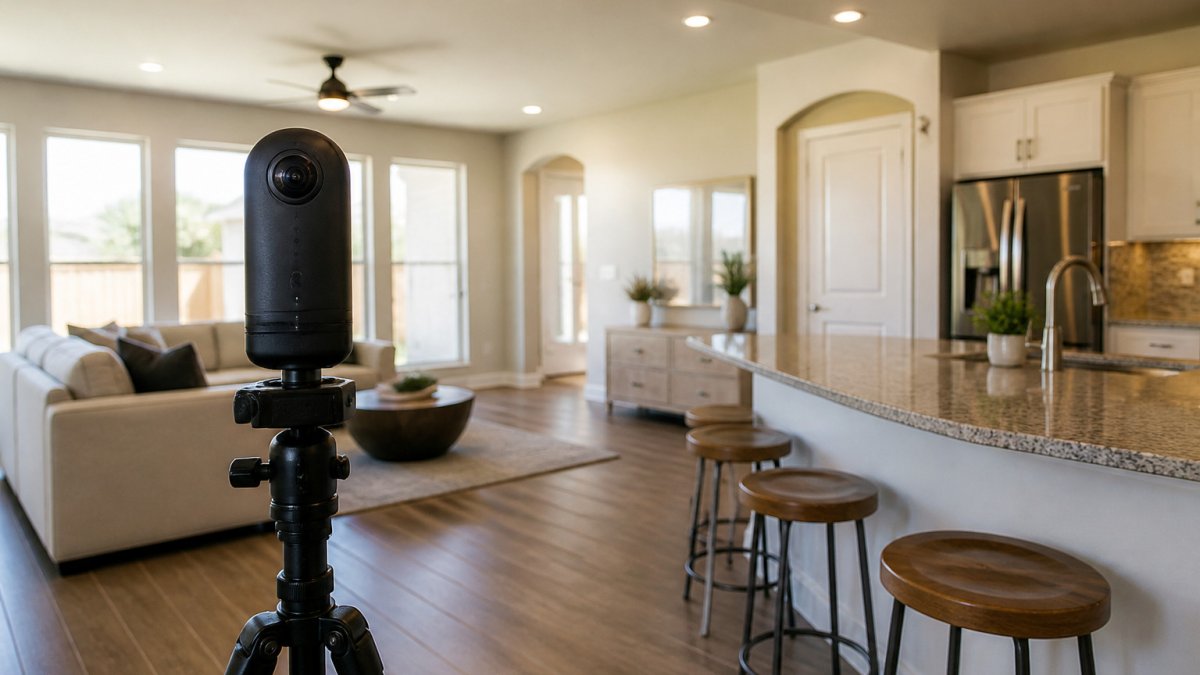
A 3D virtual tour is an interactive, room-to-room walkthrough of a property that buyers can open from a listing page on their phone or computer.
Buyers can usually do a few things in a typical tour:
- Move from room to room and see how the rooms connect
- Look around in any direction from a fixed spot
- Get a sense of the property layout and flow
This spatial view is what makes tours useful. A tour shows the whole space, including the hallway that leads to the bedroom and the distance from the kitchen to the back door. National Association of REALTORS research on buyer home search methods
Buyers can usually do a few things in a typical tour:
| Buyer action | What it shows | Why it matters |
|---|---|---|
| Move from room to room | How rooms connect | Shows the flow of the home |
| Look around from a fixed spot | Views in any direction | Gives a full sense of each space |
| Check layout and flow | Property layout | Reveals what photos can miss |
| Compare room sizes | Relative room size | Helps buyers judge scale |
Do Virtual Tours Help Sell Homes Faster?
Virtual tours can help, but they are not a guaranteed shortcut. For a sense of how agent commissions fit into the overall selling picture, see Arizona real estate commission rates.
Here is the short version:
- Tours give remote buyers a real look at the home
- They can help weed out buyers who are not a good fit
- They may bring in more serious inquiries
Tours generally work best when paired with strong photos and an accurate listing price. A tour that shows a home clearly still needs a fair price to get buyers moving. National Association of REALTORS research on buyer home search methods
Days on Market: What the Evidence Shows
Days on market measures how long a home stays listed before it goes under contract. It is the most common way to judge how quickly a home sells, and it is also the metric most often misused in tour marketing.
Public, peer-reviewed data that isolates the effect of a 3D tour on days on market is limited. Most of what gets shared comes from brokerages, listing platforms, and tour vendors, and those sources have their own reasons to highlight good results. So treat any claim that tours cut days on market by a specific amount with caution, and ask three questions before you believe a number:
- What was the sample? A claim based on a few dozen listings in one metro is not a national average.
- What was controlled for? If the study did not account for price, location, property condition, seasonality, and marketing spend, the tour may be getting credit for work done by other factors.
- What was measured? Listing views, tour completions, and inquiry counts are not the same as days on market. A tour can lift engagement without shortening time to contract.
A useful way to read the evidence is to separate three layers:
- Interest signals, listing views, saves, tour completions, and inquiry volume. These usually move first and are the easiest to attribute to a tour.
- Qualification signals, showing requests, second showings, and offer activity. These tell you whether the tour is filtering for serious buyers.
- Outcome signals, days on market and sale-to-list price ratio. These are the slowest to move and the most influenced by price and condition.
What you can do is track your own numbers against a clean baseline:
- Note the listing date and the date you first post the tour
- Record how many showing requests come in during each week
- Compare your days on market to recent sales on your street and in your price band
That comparison tells you more than a national average will, because it reflects your price, your neighborhood, and your buyer pool.
Causation Versus Correlation in Listing Data
Here is where many sellers get misled. A home with a tour may sell faster, but that does not prove the tour caused the sale. Homes with tours are often priced well, staged well, and marketed well.
Think of it this way: a tour is one ingredient, not the whole recipe. When you read a claim about tours and speed, ask whether the study controlled for price, condition, and location.
A few confounders are worth naming explicitly, because they drive most of the variation in days on market:
- Price relative to comps, the single largest lever on time to contract
- Location and school assignment, buyers filter hard on these before they ever open a tour
- Property condition and updates, a tour shows flaws as clearly as it shows strengths
A Practical Way to Measure Tour Performance
If you want to know whether a tour is earning its cost, track a small set of metrics from listing day forward. Most listing platforms and agent dashboards expose these numbers, and a simple spreadsheet is enough to keep them straight:
- Listing views, total and week-over-week change
- Tour completions, how many viewers finish the walkthrough versus drop off
- Inquiry rate, inquiries divided by listing views
Compare the first two weeks with the tour against the first two weeks without one, if you have a prior listing to reference, or against similar active listings nearby. A tour that lifts tour completions and showing conversion but leaves days on market flat is still doing useful work, it is filtering buyers and saving showing time, even if it is not the reason the home sells. Zillow research on home buyer online search behavior
How to Prepare a Home for a Virtual Tour
Preparing a home for a tour is mostly about clear sight lines and clean surfaces. The camera will show everything, so plan for it.
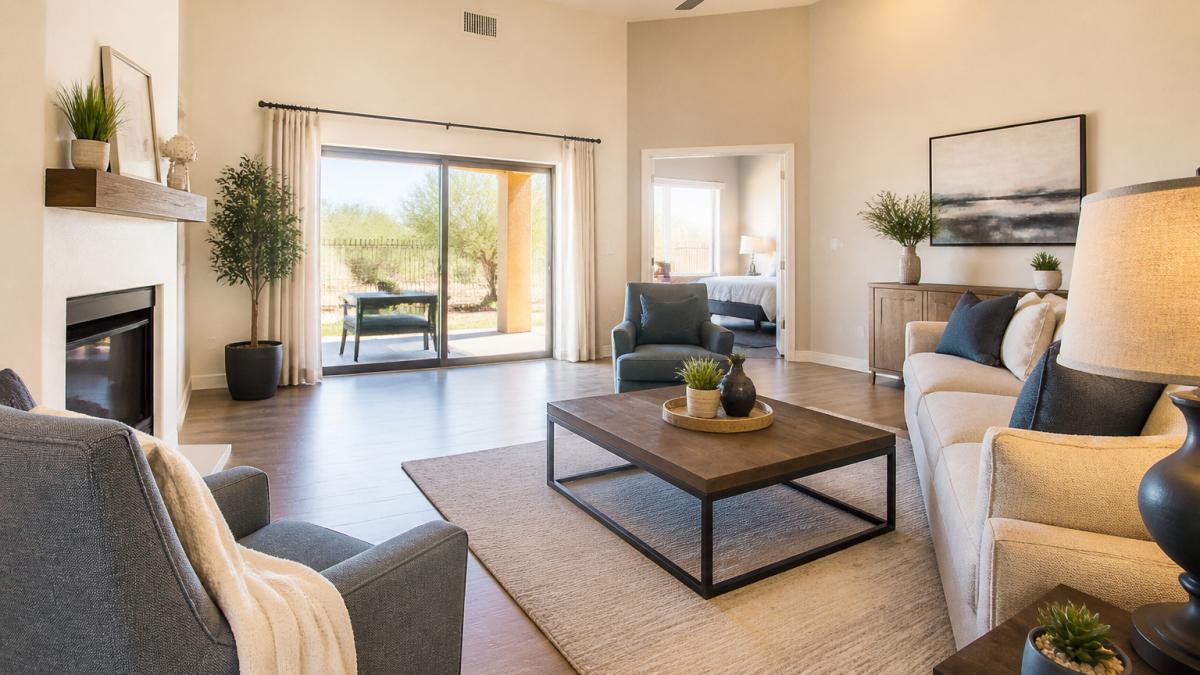
Start with these steps:
- Clear kitchen counters and remove small appliances
- Take personal photos, magnets, and clutter off walls and fridges
- Open blinds and turn on every light for consistent brightness
- Make beds and put away laundry and shoes
- Set furniture so each room has a clear walking path
- Hide trash cans, cords, and pet items
Watch out: Dim or uneven lighting is one of the most common problems in tour footage. Shoot at midday with all lights on, and check the result before you publish.
3D Home Tour Cost: What Sellers Should Budget
Tour prices vary by provider, property size, and the level of detail you want, so this article does not list a set price. Pricing depends on the scope of the work, so request a written quote from Bernie Krause for current rates. What it can do is show you how the cost is built and how to compare it with what the tour saves you.
What Drives the Price
Most quotes are assembled from a few components. Ask any provider for a written quote that itemizes each one:
- Capture, the on-site scan or photo shoot, usually priced by square footage or by room count
- Editing and hosting, stitching, labeling, and the monthly or annual fee to keep the tour live
- Add-ons, floor plans, drone exteriors, twilight versions, and narrated or captioned walkthroughs
A common pattern is a base capture fee plus a hosting subscription, with add-ons priced individually. Larger homes and multi-building properties cost more because capture time scales with square footage. If the home is vacant, expect a faster shoot; if it is occupied, expect more prep time and possibly a re-shoot after staging changes.
A Transparent ROI Comparison
The right question is not "what does a tour cost" but "what does a tour cost compared with what it saves." Build the comparison in three columns:
- Tour cost, capture, editing, hosting for the expected listing period, and any add-ons
- Saved showing time, estimate the hours you and your agent would spend on in-person showings that the tour replaces, and multiply by a reasonable hourly value for your time
- Qualified-lead value, estimate how many inquiries convert to showings and how many showings convert to offers, then compare that with your prior listing or with similar homes nearby
A tour that costs a few hundred dollars and eliminates several low-intent showings can pay for itself in time alone, even before any effect on days on market. A tour that costs more than the showing time it saves needs a clearer engagement or speed benefit to justify itself.
For the full picture of what selling costs, compare the expected commission with the cost of tour work, since both come out of your selling budget.
When a Tour Is Worth the Spend
A tour tends to earn its cost when at least one of these is true:
- The buyer pool is likely to include out-of-area or remote buyers
- The home has a layout that photos undersell, such as an open plan or an unusual flow
- The home is priced to attract high inquiry volume, where filtering matters most
A tour is usually a weaker spend when the home is already generating strong local showing traffic, when the price is the main obstacle, or when the property is a tear-down or land listing where the structure is not the selling point. In those cases, the same budget often does more work in professional photography, staging, or paid listing promotion.
Real Estate Virtual Tour Best Practices for Faster Sales
Good tours follow a few simple habits:
- Shoot every room, including closets and bathrooms
- Keep the walkthrough in a logical order, front door to back
- Add room labels so buyers know where they are
Reaching Out-of-Area Buyers and Reducing Unnecessary Showings
Tours are especially useful for buyers who cannot visit in person. An out-of-state buyer can walk through a home, check the layout, and decide whether a visit is worth the trip.
This also reduces wasted showings. When buyers can rule out a home online, they spend less time on tours that were never a fit. Agents often report that the buyers who do arrive in person are more serious.
Booking Your Virtual Tour and Measuring Results With Bernie Krause
At Bernie Krause, we help Arizona sellers decide whether a 3D tour makes sense for their home and budget. We have sold 9 properties, including homes at 1820 E FRIER Drive #1 in Phoenix and 2641 E CALLE DEL NORTE Drive in Gilbert.
If you are thinking about listing soon, we can review your home and talk through the options.
Frequently Asked Questions
Do 3D virtual tours help homes sell faster?
Listings with 3D virtual tours often attract more online engagement, and that engagement can lead to earlier showing requests. The strength of the effect varies by property, price point and local market, and published data on days on market does not always separate the tour's impact from other factors such as pricing and photo quality. Sellers should track days on market and showing requests before and after adding a tour to judge the result for their own listing.
How much does a 3D home tour cost?
Pricing depends on home size, the number of rooms and any add-on services, and it varies by provider. Bernie Krause does not publish set rates for this service, so sellers should request a quote directly through the Bernie Krause website. Ask what the quote includes, such as hosting, floor plans and turnaround time, before comparing it with other options.
How can sellers prepare a home for a virtual tour?
Declutter countertops and floors, remove personal photos where possible, turn on every light, and open blinds for natural light. Make beds, clear the kitchen and bathroom surfaces, and check that doors and closets are presentable. Good preparation helps the tour show the home at its best and keeps the walkthrough focused on the property rather than on clutter.
Can a virtual tour help buyers decide whether to schedule an in-person showing?
Yes. A tour lets buyers check layout, room flow and property features before they visit, which helps them filter out homes that do not fit their needs. This is especially useful for out-of-area and relocating buyers who cannot easily view homes in person. Buyers who have explored a tour arrive at showings with more specific questions, which can make visits more productive.