 comparison
Local vs National Realtors: Which Is Right for You?
Table of Contents
- Understanding Local vs National Realtors
- Key Differences Between Local and National Teams
- Benefits of Working With a Local Real Estate Professional
- National Real Estate Companies vs Local Agents
- How to Choose a Real Estate Agent for Your Situation
- Questions to Ask Before Hiring a Real Estate Agent
- Making Your Final Decision
- Conclusion
Last Updated: August 2, 2026
The choice between local and national realtors directly impacts your timeline, costs, and final outcome. According to National Association of Realtors market research, nearly 88% of home transactions involve a licensed real estate professional. At Bernie Krause, we've guided clients through this decision in the East Valley market. The reality is that local and national realtors operate on fundamentally different business models, use different tools, and solve different problems. Some clients need what only a local expert can provide. Others benefit from the resources and reach that national platforms offer.
Understanding Local vs National Realtors
A local realtor is typically an independent agent or part of a smaller regional brokerage, building their business on deep knowledge of specific neighborhoods and long-term relationships within their community. They may handle 10-30 transactions per year and invest heavily in understanding market nuances.
National real estate companies operate differently. They're large organizations with thousands of agents across multiple states that standardize processes, use national brand recognition, and deploy centralized marketing resources. HomeLight, for example, connects buyers and sellers with top-performing agents using performance data rather than local presence alone.
The key insight: local realtors compete on expertise and relationships. National companies compete on resources, technology, and reach. Neither is inherently better; they're optimized for different buyer and seller profiles.
Key Differences Between Local and National Teams
Market Knowledge and Local Expertise
A local realtor's primary asset is granular, lived knowledge of their market. They understand which streets have the best schools, where property values are trending upward, how zoning changes affect specific neighborhoods, and which builders are known for quality construction.
National companies address this through hiring local agents and providing them with national-scale tools. The advantage is consistency and access to broader data. The disadvantage is that a newer agent at a national firm may lack the institutional memory of someone who's been selling homes in Chandler for fifteen years.
For relocating professionals moving to the Phoenix area, a national platform can match you with an agent quickly and provide relocation resources. A local expert can tell you which East Valley neighborhoods align with your specific lifestyle needs before you even visit.
Technology and Marketing Reach
National real estate companies invest heavily in technology infrastructure. Zillow Premier Agent provides agents with access to millions of active homebuyers on major platforms, creating a marketing advantage for your listing.
Local realtors typically use the same listing platforms (MLS, Zillow, Realtor.com) but lack the advertising budget to amplify listings beyond organic search. However, they often compensate through strong local networks and relationships with other agents and contractors.
If you need maximum visibility for a sale, national reach matters. If you're buying and want personalized guidance without high-pressure sales tactics, local expertise often delivers better results.
Commission Structures and Negotiation
Commission rates are negotiable regardless of whether you work with a local agent or national company. Traditional agents typically charge 5-6% (split between buyer and seller agents). Some national platforms like UpNest introduce competition that can lower rates; agents using UpNest pay a 30% referral fee on their commission, which sometimes incentivizes them to negotiate lower rates with clients.
Local agents often have more flexibility in negotiating commission because they're not bound by corporate pricing guidelines. However, they also have fewer resources to absorb lower commissions.
Accountability and Dispute Resolution
When something goes wrong, your recourse differs based on who you hired. Local agents are accountable through their state real estate license and local brokerage oversight. National companies have additional layers: corporate compliance, customer service departments, and arbitration processes.
A local agent who damages their reputation in a tight-knit market faces real consequences. A national company agent can be reassigned or fired, but the company itself remains insulated from individual agent failures. For first-time buyers needing expert guidance, accountability often translates to responsiveness.
Benefits of Working With a Local Real Estate Professional
Deep Knowledge of Neighborhoods and Zoning
A local realtor understands specific zoning regulations affecting properties in Chandler, Gilbert, and Scottsdale. They know which neighborhoods are zoned for commercial expansion, where new schools are planned, and how utility infrastructure affects property values.
For sellers, this knowledge translates into accurate pricing and marketing strategy. For buyers, it means you avoid overpaying for a property in an area facing zoning challenges. When you're competing for a home in a hot market like the East Valley, this difference can determine whether you win or lose a bid.
Personalized Service and Accessibility
A local realtor typically handles fewer transactions than a national company agent, which means more time per client. You get calls returned the same day, property showings scheduled at your convenience, and negotiation strategies tailored to your specific situation.
This accessibility matters most for first-time buyers who need education. You're not one of fifty active clients; you're a relationship that the agent is invested in maintaining. For sellers looking to move quickly, a local agent who knows local buyers and other agents can often move faster than a national platform.
Established Relationships in Your Market
A local realtor has relationships with home inspectors, contractors, title companies, lenders, and other agents. These relationships accelerate transactions and improve outcomes. When an inspection reveals a problem, your local agent knows which contractors to call and can often negotiate faster resolution.
For homeowners in Arizona communities looking to sell for top dollar, these relationships directly impact your bottom line. A local agent who knows local builders and investors can sometimes generate multiple offers before a property even hits the market.
National Real Estate Companies vs Local Agents
Scale and Resources
National real estate companies operate with resources that individual local agents cannot match. They have dedicated marketing teams, technology platforms, research departments, and administrative support. If you're selling a luxury property or need sophisticated marketing, national reach can matter.
However, scale also creates inefficiency. Your transaction is one of thousands. Response times can slow. For complex or urgent situations, this bureaucracy becomes a liability rather than an asset.
Standardized Processes vs Flexibility
National companies implement standardized processes to ensure consistency and reduce liability. This is good for predictability but bad for flexibility. If your situation doesn't fit the template, you need a rent-back arrangement, you're selling a multi-use property, or you need creative financing solutions, a standardized process becomes a constraint.
Local agents can often bend rules and find creative solutions because they're not bound by corporate policy. This flexibility is valuable when your situation is complicated.
Brand Recognition and Buyer Reach
National brands have marketing power. A property listed under a national company name gets visibility that a local listing might not. For sellers in competitive markets, this visibility matters.
But brand recognition doesn't always translate to better outcomes. A buyer searching for homes in the East Valley doesn't care whether their agent works for a national company or a local brokerage; they care whether that agent understands the local market and can help them win a bid.
| Dimension | Local Realtors | National Companies |
|---|---|---|
| Market expertise | Deep, neighborhood-specific | Broad, data-driven |
| Accessibility | High (fewer clients) | Variable (depends on agent) |
| Commission flexibility | Often negotiable | Sometimes standardized |
| Technology/marketing | Basic to moderate | Advanced, national reach |
| Relationship-based service | Strong | Transactional |
| Speed of closing | Fast (local relationships) | Standard (process-driven) |
| Best for | Neighborhoods, personalization | Relocation, luxury, speed |
How to Choose a Real Estate Agent for Your Situation
Assessing Your Specific Needs
Start by defining what you actually need. Are you buying or selling? Are you relocating or staying local? Is speed critical, or do you have time to find the right property? Do you need education, or do you know exactly what you want?
A first-time buyer in Arizona needing expert guidance benefits from a local agent who will spend time explaining the process. A corporate relocation specialist benefits from a national company's relocation services. A homeowner in Chandler looking to sell quickly benefits from a local agent with buyer relationships.
Write down your top three priorities. For most people, they're some combination of: speed, price, education, convenience, and peace of mind.
Evaluating Experience and Track Record
Look at specific metrics: How many transactions has this agent completed in your neighborhood specifically? What's their average days-on-market? What percentage of their listings sell at or above asking price?
Ask for references from past clients and actually call them. Ask: Was the agent responsive? Did they deliver what they promised? Would you work with them again?
For a local realtor, verify their real estate license with the Arizona Department of Real Estate. Confirm they're in good standing and check for complaints.
Decision Matrix for Buyers, Sellers, and Relocators
For buyers: Local agents win when you need neighborhood expertise and personalized guidance. National platforms win when you're relocating and need broader exposure. Choose local if you're buying in a specific East Valley neighborhood. Choose national if you're moving from out of state.
For sellers: Local agents win when you need to sell quickly and benefit from existing buyer relationships. National companies win when you're selling a luxury property or need maximum marketing exposure. Choose local if you're selling in a competitive market like Chandler or Gilbert. Choose national if you're selling a unique property needing broader buyer exposure.
For relocators: National companies provide relocation packages, temporary housing assistance, and connections to agents in your destination market. Local agents provide market expertise once you arrive. The ideal approach: use a national company's relocation services to move, then hire a local agent to help you find your home.
Questions to Ask Before Hiring a Real Estate Agent
Understanding Their License and Credentials
Ask: "What is your real estate license number, and how long have you held an active license?" Verify the answer with the Arizona Department of Real Estate. Ask about their brokerage affiliation and tenure. A long tenure with the same brokerage suggests stability.
Ask about professional designations like Certified Residential Specialist (CRS) or Accredited Buyer's Representative (ABR). These indicate additional training and commitment to the profession.
Clarifying Services and Commission Terms
Ask: "What specific services do you provide, and what do you charge for each?" Don't assume commission is the only cost. Get everything in writing.
Ask: "Is your commission negotiable?" If they say no immediately, that's a red flag. Commission is always negotiable. Ask: "What would you charge if I sign a six-month exclusive agreement versus a three-month agreement?"
Assessing Communication Style and Availability
Ask: "How will we communicate, and how quickly will you respond to messages?" You need an agent who responds within hours, not days.
Ask: "Are you available for showings on weekends and evenings?" If you're a working professional, you need flexibility.
Making Your Final Decision
The choice between a local realtor and a national company comes down to matching your situation to the model's strengths. There's no universally "best" choice, only the best choice for you.
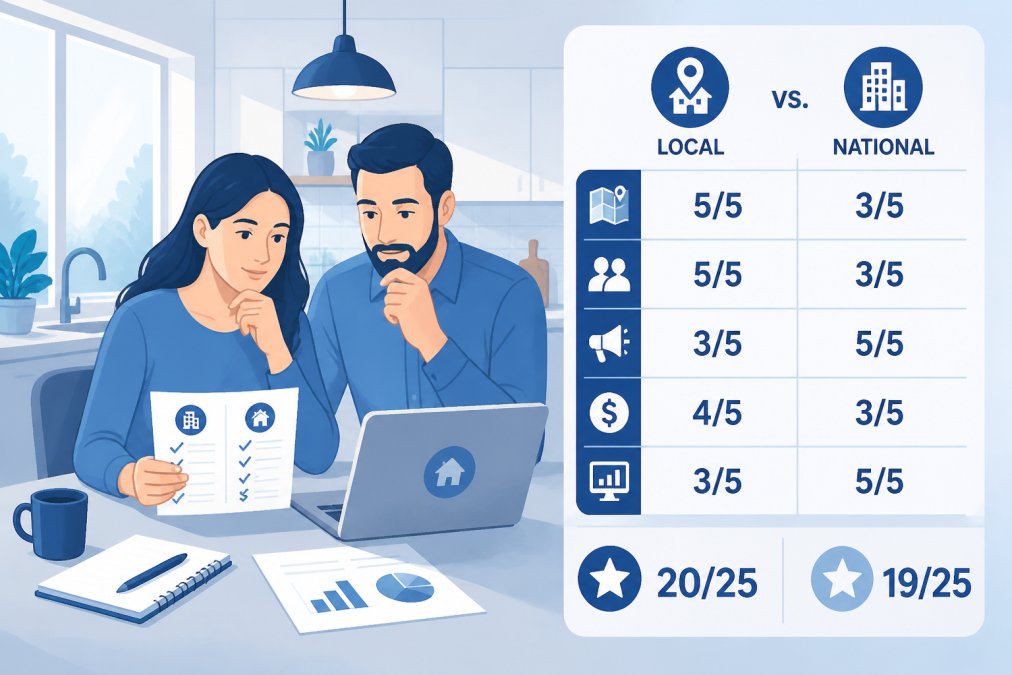
If you're a first-time buyer in the East Valley who values education and personalized guidance, a local realtor typically delivers better outcomes. If you're relocating from out of state and need coordinated support across multiple markets, a national company's relocation services provide real value. If you're selling a home in a competitive market and need maximum exposure, you might benefit from a national platform's marketing reach, but only if paired with an agent who understands your local market.
The most important factor isn't the company size or brand name. It's finding an agent who understands your specific situation, responds promptly, and has a track record of delivering results in your market. Interview multiple agents. Ask the questions above. Check their credentials and references. Then choose the one who makes you feel confident and supported.
For homeowners in Arizona communities like Chandler, Gilbert, and Scottsdale looking to sell for top dollar, or for first-time buyers needing patient, expert guidance, the difference between a generic national agent and a local expert who knows your neighborhood is the difference between a successful transaction and a frustrating one.
At Bernie Krause, we combine deep East Valley market knowledge with the resources and support systems that make transactions smooth and successful. Whether you're buying your first home, selling in a competitive market, or relocating to the Phoenix area, Bernie provides expert guidance tailored to your situation and accessibility when you need it most. Contact Bernie Krause today to discuss your specific needs and find out how local expertise can deliver better results for your real estate goals.
Frequently Asked Questions
What are the main benefits of using a local real estate agent?
Local real estate agents offer deep market knowledge specific to neighborhoods, school districts, zoning regulations, and permit requirements in your area. They typically have established relationships with other local agents, inspectors, and contractors, which can speed up transactions. Local agents provide personalized guidance tailored to your community and are often more accessible for in-person meetings or property showings. They understand local ordinances and can advise on factors that affect property valuation in your specific market.
How do national real estate companies compare to local agents?
National real estate companies bring significant resources, advanced technology platforms, and broad marketing reach across multiple regions. They offer standardized processes and may have access to more buyer pools through national networks. However, they may lack the hyperlocal market knowledge of neighborhood demographics, local trends, and community-specific details that local agents possess. National companies can be less flexible with commission structures and may prioritize volume over personalized service. For specific markets like Arizona's East Valley, a local agent often provides more targeted expertise.
What questions should I ask a real estate agent before hiring them?
Ask about their active real estate license status and how long they've been in the business. Inquire about their commission structure, whether it's negotiable, and what services are included. Request their track record with specific transaction types (buying, selling, or both) and ask for references from recent clients. Clarify their communication style, availability for showings, and how they handle transactions remotely if needed. Ask how they stay current with local market trends, zoning changes, and permit requirements. Understanding their approach to client advocacy and problem-solving will help you determine if they're the right fit.
How do I know if a local agent actually has better market knowledge than a national team?
A qualified local agent should be able to discuss current neighborhood demographics, school district ratings, recent sales data, and local ordinances without hesitation. Ask them about recent zoning changes, permit requirements, or market trends specific to your area. Request specific examples of how their local knowledge helped past clients. They should be familiar with utility information, property valuations in different neighborhoods, and how factors like proximity to schools or commercial areas affect prices. A local agent with a strong track record in your community can demonstrate expertise through concrete examples, not just general statements.
Should I choose a local or national realtor if I'm relocating to Arizona?
If you're relocating to Arizona, a local real estate agent is typically the better choice. They understand Arizona-specific market conditions, neighborhood characteristics, and community dynamics that an out-of-area agent won't. A local agent can guide you through school district options, utility providers, local ordinances, and neighborhood demographics in areas like Chandler, Gilbert, and Scottsdale. They can handle remote transactions efficiently and provide personalized guidance throughout your relocation. National companies may offer coordination services, but a local agent's direct market expertise and accessibility usually results in better outcomes for relocating professionals.
This article was written using GrandRanker