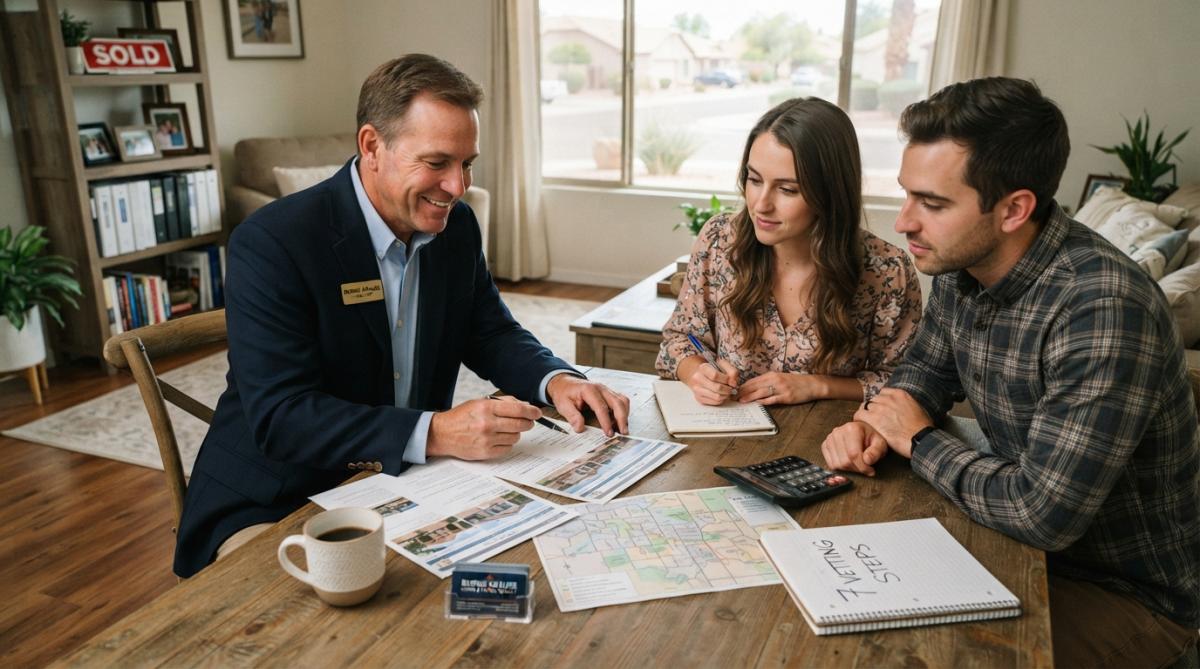
 how-to guide
How to Interview a Listing Agent: 12 Questions to Ask
Table of Contents
- How to Interview a Listing Agent: Preparation and Strategy
- Questions to Ask a Real Estate Agent About Experience and Track Record
- Real Estate Agent Commission and Fee Structure Questions
- Real Estate Agent Marketing Strategy and Property Exposure
- Comparative Market Analysis and Pricing Strategy Questions
- Communication, Availability, and Red Flags to Watch For
- Local Market Knowledge and Neighborhood Expertise
- Common Mistakes to Avoid When Interviewing Listing Agents
How to Interview a Listing Agent: 12 Questions to Ask
Last Updated: August 1, 2026
Choosing a listing agent is one of the most important decisions you'll make when selling your home. The agent you choose directly impacts your net proceeds, sale speed, and overall experience. The difference between an agent who understands your market and one who doesn't can mean tens of thousands of dollars. Below, we'll walk you through exactly how to interview a listing agent so you can identify who's truly qualified to represent your property.
How to Interview a Listing Agent: Preparation and Strategy
Before meeting with any agent, prepare a clear framework for evaluation. Many sellers interview agents without structure, making it impossible to compare candidates fairly. The best approach is to prepare specific questions in advance, research each agent's background, and set clear expectations.
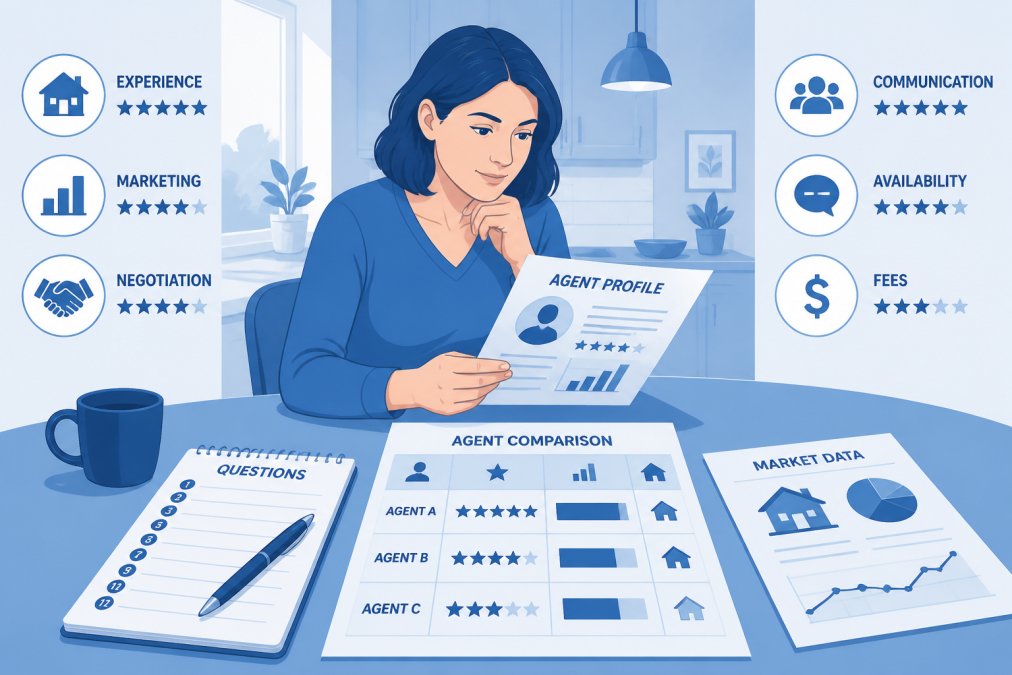
Gather basic information about each agent: review their online presence, check transaction history on public records, and read client testimonials. This 30-minute per-agent investment saves time with unsuitable candidates. When scheduling, ask if they'll spend 45 minutes to an hour discussing your property and approach. Agents who rush aren't worth your time.
What You'll Need Before the Interview
Have these materials ready: a recent property appraisal or tax assessment, photos of major upgrades, your mortgage statement, and a list of comparable properties you've researched. Prepare a written list of your priorities, whether that's selling speed, maximum price, or minimal hassle. This clarity helps you evaluate whether each agent's strategy aligns with your goals.
How Many Agents Should You Interview?
Interview at least three agents, but no more than five. Three provides enough variety to identify patterns in approaches and pricing; more than five becomes overwhelming. Each interview should feel like a conversation, allowing the agent to assess whether they want to represent you.
Questions to Ask a Real Estate Agent About Experience and Track Record
Your listing agent's experience directly affects how well they market your home and negotiate offers. Ask specific questions about their transaction history rather than accepting vague claims about expertise.
Start with: "How long have you been selling real estate, and how many homes have you sold in the past two years?" Listen for specific numbers. Then ask: "How many of those sales were in my neighborhood or similar communities?" An agent specializing in your area understands local pricing, buyer preferences, and market timing in ways a generalist cannot.
Follow up with: "What was your average days on market for those properties, and how did that compare to the neighborhood average?" This reveals whether they're actually moving homes quickly. If their average significantly exceeds the neighborhood median, ask why.
Understanding Professional Designations and Credentials
Credentials like ABR (Accredited Buyer Representative), CRS (Certified Residential Specialist), or GRI (Graduate, REALTOR® Institute) demonstrate commitment to the profession. However, they don't substitute for actual performance. An agent without fancy letters who has sold 20 homes in your market in the past year is more valuable than a credentialed agent who rarely works in your area.
Ask: "What professional designations do you hold, and what did you learn through that training that directly applies to selling my home?" A good agent explains how their credentials made them better at their job.
Real Estate Agent Commission and Fee Structure Questions
Commission matters, but it shouldn't be your only deciding factor. A 2.5% listing commission from an agent who sells your home in 30 days for market value beats a 2% commission from an agent taking 120 days and leaving money on the table.
Start by asking: "What is your standard listing commission, and is it negotiable?" Most agents work on a percentage basis split between listing and buyer's agents, typically 5-6% total (2.5-3% each). In competitive markets or for higher-priced homes, there's often room to negotiate.
Ask: "Are there any other fees I should expect, staging, photography, marketing, or administrative costs?" Some agents bundle these into their commission; others charge separately. You need the full picture before signing.
Negotiating Commission Rates
Commission negotiation is appropriate but strategic. On a $500,000 home, negotiating from 2.5% to 2.4% saves $500, not worth losing a great agent. On a $1 million home, that same 0.1% difference is $1,000.
Never open with your desired rate. Let the agent state their standard first. Then ask: "Given current market conditions and my property's strength, is there flexibility in your commission?" This frames it as market-based discussion, not haggling.
Understanding Exclusive Right to Sell Agreements
The listing agreement is your contract with the agent. The most common type is "exclusive right to sell," meaning the agent earns commission regardless of who sells the home, even if you find the buyer yourself.
Ask: "What type of listing agreement do you use, and can we negotiate the terms?" Specifically ask about the termination clause. How long is the agreement, and what happens if you're unhappy? A standard listing agreement is typically 90-180 days. Shorter is better because it keeps the agent accountable.
Also ask: "If I find a buyer on my own before the listing period ends, do you still earn a commission?" In most exclusive right to sell agreements, yes. However, some agents negotiate carve-outs for specific people you've already shown the home to.
Real Estate Agent Marketing Strategy and Property Exposure
How an agent markets your home directly impacts buyer exposure and sale speed. Don't accept vague answers about "extensive marketing."
Ask: "Walk me through your exact marketing plan for my home. What will you do in the first week, first month, and beyond?" A strong agent outlines a detailed strategy including professional photography, virtual tours, targeted online advertising, open houses, and outreach to other agents. They should specify which platforms they'll use, their advertising budget, and how they'll track results.
Ask: "How do you price homes to attract buyer attention?" Some use aggressive pricing to generate showings; others price at market value. The agent should explain their philosophy and how it applies to your situation. If they suggest pricing 10% above market value to "start negotiations," that's a red flag, overpriced homes sit longer and eventually sell for less.
Multiple Listing Service and Market Reach
The Multiple Listing Service (MLS) is where most buyer agents search for properties. Ask: "How will you ensure my listing stands out on the MLS?" A good agent writes compelling descriptions, uses available keywords, and updates regularly with showing feedback.
Also ask: "What's your process for getting other agents to show my home?" Some actively reach out to buyer's agents; others rely on the MLS alone. Proactive outreach can make a real difference in competitive markets.
Technology Stack and Digital Tools
Ask: "What technology tools do you use to market homes and track buyer interest?" Look for agents using professional photography, virtual tours, digital transaction management, CRM systems, automated showing feedback, and social media marketing.
Ask: "Can I see examples of listings you've marketed recently?" Request to view their website, social media, and recent MLS listings. The quality of photography, descriptions, and presentation reveals whether they're serious about marketing.
Comparative Market Analysis and Pricing Strategy Questions
One of the most critical services an agent provides is determining the right asking price through a comparative market analysis (CMA).
Ask: "Can you walk me through a preliminary CMA for my home?" A strong agent arrives prepared with a detailed analysis showing comparable properties, sale prices, days on market, and reasons for differences. They should explain why your home is worth what they're recommending.
Look for red flags. If they recommend a price significantly higher than comparable properties without clear justification, they're either inexperienced or trying to win your listing by telling you what you want to hear. A realistic price attracts serious buyers; an inflated price attracts nobody.
How Agents Determine Home Valuation
Ask: "How do you account for my home's unique features when pricing it?" A good agent analyzes how features like upgrades, condition, location, views, and lot size compare to what buyers are actually paying for similar homes.
Follow up with: "What's your strategy if the market shifts after we list?" Ask how they monitor market conditions and at what point they'd recommend repricing. This reveals whether they're committed to selling your home or just collecting commission.
Communication, Availability, and Red Flags to Watch For
Establish expectations now about communication frequency and channels.
Ask: "How often will you communicate with me about showings, feedback, and market activity?" Agree on a schedule so you're never wondering what's happening with your home.
Also ask: "What's your availability for showings?" If you need flexibility for evening or weekend showings, confirm the agent can accommodate this.
Setting Communication Frequency Expectations
Discuss preferred communication methods upfront: phone calls, text messages, emails, or a combination. If you hate phone calls and the agent insists on calling daily, that's a mismatch.
Also discuss closing process coordination. Ask: "Who will coordinate with the title company, inspector, and appraiser?" You want to know your primary contact and that they'll keep you informed every step.
Identifying Conflict of Interest and Dual Agency Concerns
Dual agency occurs when one agent represents both buyer and seller in the same transaction, creating a conflict of interest. Ask: "Do you ever represent both buyer and seller in the same transaction?"
If yes, ask how they handle the conflict. Many sellers prefer working with an agent representing only the seller. This is a legitimate preference worth discussing before signing.
Also ask: "Will you represent another seller in my neighborhood while listing my home?" This isn't necessarily disqualifying, but you should know.
Understanding Termination Clauses and Exit Options
Before signing, understand your exit strategy. Ask: "If I'm unhappy with your performance, how can I terminate this agreement?" Get termination terms in writing. A listing agreement locking you in for six months with no exit puts all power in the agent's hands. You want flexibility, especially early on.
Local Market Knowledge and Neighborhood Expertise
An agent who knows your neighborhood intimately provides insights a generalist cannot.
Ask: "How long have you been working in this neighborhood, and what's changed in the market over the past two years?" Listen for specific observations about schools, development, traffic, and demographics.
Follow up with: "What are the biggest challenges for sellers in this neighborhood right now?" In some areas, it's inventory scarcity; in others, overpricing. Understanding these dynamics helps position your home strategically.
Also ask: "Can you introduce me to other agents in the area who might bring buyer clients?" Strong referral networks indicate someone invested in the community and respected by peers.
Common Mistakes to Avoid When Interviewing Listing Agents
The most common mistake is choosing an agent based on commission rate alone. A 0.5% savings means nothing if the agent sells your home for $30,000 below market value. Focus on marketing ability and negotiation skills, not just fees.
Another mistake is not asking follow-up questions. If an agent gives vague answers, push for specifics. "We'll market it heavily" tells you nothing. "We'll run Facebook ads targeting homebuyers within 10 miles, list on Zillow and Redfin, host an agent open house, and send direct mail to 500 homes" tells you exactly what to expect.
Don't sign with the first impressive agent. Sleep on it and compare notes from all interviews. Which agent asked the most questions about your situation? Which seemed most interested in understanding your goals versus just listing your home?
Pre-Listing Preparation and Agent Support
The best agents help you prepare your home for sale. Ask: "What pre-listing preparation do you recommend for my home?" A strong agent might suggest staging, repairs, professional cleaning, or landscaping improvements, explaining how these investments affect sale price and timeline.
Ask: "Will you provide staging advice, or should I hire a professional stager?" Also ask: "What repairs or improvements do you think are essential before listing?" Not every repair needs to be done before sale, but some are deal-breakers for buyers.
Selling your home is one of the largest financial transactions you'll make, and your agent choice significantly impacts the outcome. The right listing agent combines local market expertise, proven marketing skills, clear communication, and genuine commitment to your success. Focus on track record, specific marketing plans, and whether they truly understand your neighborhood and goals. If you're selling in the East Valley, reach out to discuss how we can help you achieve your home sale goals with confidence.
| Interview Element | What to Evaluate | Red Flag | Green Flag |
|---|---|---|---|
| Experience | Years in business + local sales | Vague numbers or no neighborhood focus | 20+ sales in past 2 years, 10+ in your area |
| Marketing Plan | Specific channels and timeline | "We'll market it heavily" | Detailed plan with photography, ads, outreach |
| Commission | Rate and negotiability | No flexibility or hidden fees | Transparent pricing, willing to discuss terms |
| Communication | Frequency and preferred method | No set schedule or unclear contact | Weekly updates, clear preferred channels |
| Market Knowledge | Neighborhood expertise and trends | Can't explain local pricing | Specific insights about buyer preferences |
| Termination | Exit strategy and flexibility | Locked-in long-term with no out | 30-90 day agreement with termination option |
Frequently Asked Questions
What are the most important questions to ask a listing agent?
Focus on experience, marketing strategy, commission structure, and local market knowledge. Ask about their days on market average, how they handle contract negotiation, their technology stack for property marketing, and whether they have conflicts of interest through dual agency. Request client testimonials and ask specifically how they determine home valuation using comparative market analysis. These questions reveal whether an agent has a solid fiduciary duty to you.
How do I evaluate a real estate agent's marketing plan?
Ask agents to detail their property exposure strategy across the multiple listing service, their digital marketing approach, open house frequency, and how they leverage their referral network. Inquire about professional photography, virtual tours, and social media promotion. A strong real estate agent marketing strategy should explain how they'll achieve competitive days on market in your local market. Request examples of past listings and their average selling price compared to listing price.
What should I know about real estate agent commission before signing?
Commission rates are typically negotiable and vary by market and agent. Ask the agent to explain their commission structure clearly, including what percentage they charge and whether it's split with the buyer's agent. Understand the exclusive right to sell agreement terms and what happens if you terminate early. Ask about any additional fees for transaction coordination or closing services. Get everything in writing before signing the listing agreement.
How can I tell if a listing agent really knows the neighborhood?
Ask agents specific questions about recent comparable sales in your area, neighborhood trends, and typical buyer profiles. Request their analysis of days on market for similar properties, price appreciation patterns, and any local factors affecting market value. A knowledgeable listing agent should discuss local schools, amenities, and community features. Ask for examples of recent sales they've handled in your specific neighborhood to verify neighborhood expertise.
This article was written using GrandRanker